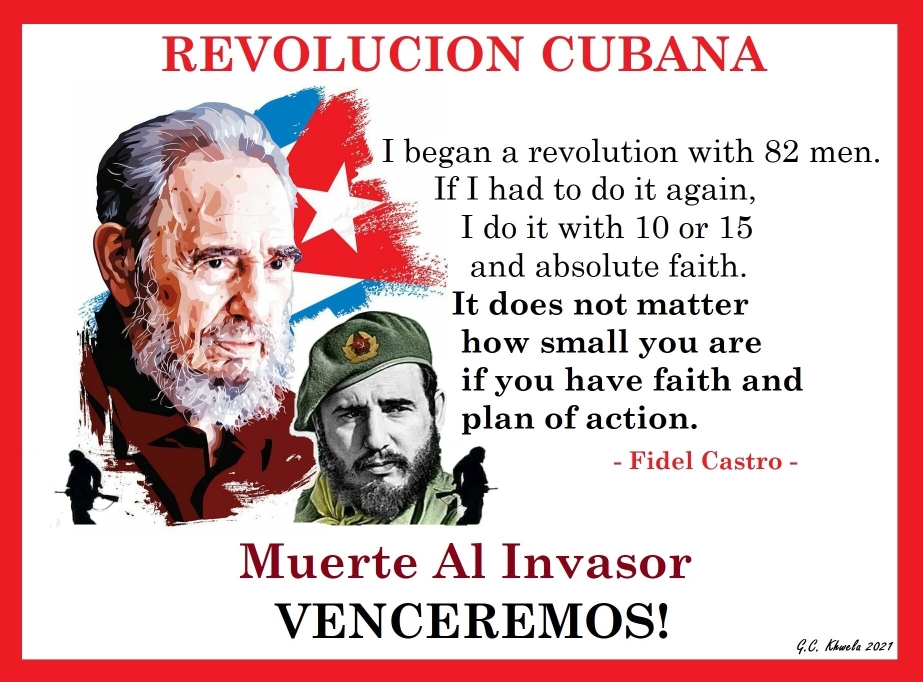
The 26th of July Movement
The 26th of July Movement was a revolutionary movement led by Fidel Castro in Cuba that aimed to overthrow the authoritarian regime of Fulgencio Batista, culminating in the successful revolution of 1959. This movement marked a significant turning point in Cuba’s history and symbolised broader themes of decolonisation and anti-imperialism during the Cold War era, as it sought to establish a socialist government free from foreign influence, particularly that of the United States.
The movement was named after the failed attack on the Moncada Barracks on July 26, 1953, which is considered the beginning of Castro's revolutionary efforts. The 26th of July Movement gained significant support from various segments of Cuban society, including students, intellectuals, and workers disillusioned with Batista’s corrupt regime. After years of guerrilla warfare in the Sierra Maestra mountains, the movement successfully overthrew Batista’s government on 1 January 1959. The revolution not only transformed Cuba but also inspired other revolutionary movements across Latin America and was seen as a challenge to US dominance in the region.
The 26th of July Movement embodied anti-imperialist sentiments by directly opposing the influence and control exerted by the United States over Cuba. The movement sought to liberate Cuba from foreign domination and establish a government that prioritised national sovereignty. Fidel Castro’s leadership emphasised social