Flag Boshielo Captured and Killed with Three of His Comrades
On 20 August 1970, just after the African National Congress (ANC) Morogoro National Consultative Conference, Flag Boshielo, a member of the National Executive Committee (NEC) and the Revolutionary Council (RC) and leading Chief Political Commissar of Umkhonto we Sizwe (MK), led a team of fighters on a mission to cross into South Africa. The team consisted of Castro Dolo, Victor Ndaba and Bob Zulu, which ran into an ambush in the Caprivi Strip, South West Africa (Namibia), being betrayed by a local apartheid agent.
The four perished without any trace and it was recorded that three of the men were killed instantly in a shootout at Ishuwa by the apartheid Security Branch’s counter-insurgency Units. In the Caprivi Strip villages of Ivilivinzi and Ihaha, the shots were clearly heard, and from the near side of Ivilivinzi people were able to see the apartheid police spotlight in the distance. Later the following day, after the police had departed, a few curious boys went to examine the site. They found spent cartridges and reeds that were damaged by bullets. It took a few days before the villagers dared to pass Ishuwa again. However, when they did, they found footprints indicating that there had been a survivor.
On 22 April 1970, five comrades, including Fanele Mbali, held a meeting in Lusaka, Zambia, wherein Boshielo told Mbali that they needed a volunteer to join them, somebody who could keep a secret and act with them in a small armed unit of five guerrillas. After Mbali had accepted the offer, Boshielo informed all four that the idea was to go home through the Zambezi River by sneaking through the Caprivi Strip. The reason for them to be a small unit was to avoid detection by the enemy, and since they had the weapons, enough ammunition and sufficient money as well as food, they were going to be assisted by a Zambian national to cross the river in a ferry boat for free.
At the beginning of August 1970, Boshielo, Dolo, Ndaba and Zulu were doctoring themselves with herbs in a muti ritual at the property of Jack Simmons and Ray Alexander, on 250 Zambezi Road, Roma suburb, in Lusaka. They did this ritual without Fanele Mbali, who could not depart for the operation, as he was recalled to Moscow on ANC Acting President Oliver Tambo’s instructions in connection with the plans to launch a seaborne invasion of South Africa, which was dubbed as ‘Operation J’.
While the four were busy with the ritual, Ray Alexander was preparing herself to leave for an International Labour Organisation (ILO) conference in Sofia, Bulgaria. When she was about to leave, she begged Boshielo and his comrades not to depart before she had returned. Unfortunately when she returned after the 20th of August 1970, they had already left for life without seeing her.
Flag Marutle Mokgomane Boshielo (aka “William Marule”) was born in 1920 in Sekhukhuneland in a place called Phokoane, in Nebo, in what was then known as the Northern Transvaal (now Limpopo). He then moved to Johannesburg in his 20s, where worked as a gardener and later as a driver for a bakery. Boshielo became active in the Bakery Workers’ Union, which exposed him to the South African Congress of Trade Unions (SACTU), the Communist Party of South Africa (CPSA) and the ANC.
Boshielo was elected to serve in the Transvaal Executive Committee of the ANC, while the CPSA assisted him to further his studies through evening classes. He led the first corps of Johannesburg volunteers in civil disobedience during the ANC’s Defiance Campaign of 1952. He was also recruited to produce and distribute “The Guardian” newspaper, which was a mouthpiece of the CPSA. Boshielo was also a founder member of “Sebatakgomo”, a resistance movement formed by Sekhukhune migrant workers in Johannesburg, which became central in the 1957 – 1961 Sekhukhuneland revolt.
In the early 1960s, when the ANC was banned by the apartheid government, Boshielo went into exile where he received military training and political advancement at the Institute of Social Sciences, also known as the International Lenin School, in Moscow. He then became one of the MK first inhabitants at the Kongwa camp, in Dodoma, Tanzania. Boshielo is renowned for being the foremost defender of a new proposal to open ANC membership to people of all race groups at the ANC’s 1969 Morogoro Conference.
The proposal was adopted and, in addition, Boshielo was appointed as MK’s overall Political Commissar. As head of a commissariat of ten people in Lusaka, Flag Boshielo, was tasked with extensive preparations for the conference, which included research discussion papers and individual and collective written memoranda. The Morogoro Conference was concluded in a spirit of harmony and optimism, but within months the ANC was faced with new challenges.
In July 1969, following the adoption of the Lusaka Manifesto, Tanzania ordered Kongwa camp to be closed. The Tanzanian authorities cited security concerns, leading to all ANC MK cadres leaving the country within fourteen days to the Soviet Union, where they were to stay for three years. However, those MK cadres that remained in Zambia were reportedly misbehaving in the streets of Lusaka, with allegations of drunkenness, brawling and rape made against them. Ultimately, in July 1969, the Zambian government demanded that all MK military personnel be moved from Lusaka to a bush camp, close to another ZIPRA (Zimbabwe People’s Revolutionary Army) camp, east of the city.
During that period at the bush camp, Boshielo and the three guerrillas, were preparing to enter South Africa through the Caprivi Strip. One of the three guerrillas was Castro Dolo, whose real name was Faldon Mzwonke, also known as Mcebisi Kokwane, and was 52 years old at the time of his disappearance. Along with Chris Hani, Archie Sibeko and James Tyeku, he was arrested in Cape Town in 1962 for distributing banned literature and he fled the country while on bail.
Castro Dolo and Victor Ndaba, also known as Theo Mkhalipi or Victor Dlamini, were long-standing friends. They were both from Transkei and both were veterans of the Wankie campaign of 1967. Victor Ndaba was 48 years old at the time of their disappearance. The last and the youngest of the four was Bob Zulu, also known as Madiba and was a relative of Nelson Mandela. Bob Zulu had been involved in the Pondo revolt in 1960.
Boshielo and his comrades may have been unaware of the extent to which South Africa had during that time expanded its counter-insurgency efforts, but the danger of a journey back home was never in doubt. The apartheid government had initiated a training programme to establish and deploy police counterinsurgency (COIN) or TIN units in the Eastern Caprivi. TIN was the acronym for “Teeninsurgensie”, which means counterinsurgency in Afrikaans. Their task was to patrol and guard the land and river borders with neighbouring Zambia and Botswana.
Moreover, in 1967 the Security Branch deployed the specialised Counter-Terrorist Interrogation Unit (CTIU) with the main task of obtaining intelligence within the same area. The Counter-Terrorist Interrogation Unit enlisted informants within the Eastern Caprivi and in Zambia. Aided by locally recruited policemen, the Security Branch raided villages to search for and arrest “subversive elements”, sometimes transporting them to South Africa for interrogation in the Kompol building in Pretoria. Suspected activists were singled out for frequent visits, while their families being harassed and interrogated on a regular basis. Many fled to Zambia, and in 1968 police brutality and repression induced entire villages to seek safety in neighbouring Zambia and Botswana.
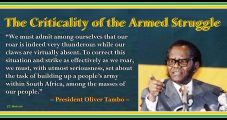
The perilous mission to be led by Boshielo was debated at a meeting of members of the MK Military HQ and of the Revolutionary Council (RC) in March 1970, with Acting President Oliver Tambo, Lambert Moloi and Thomas Nkobi being present. Tambo, however, was against the plan, as he was averse to another hazardous mission when Wankie and Sipolilo had been so unsuccessful. Those in favour argued that Boshielo’s plans conformed to the guidelines recently adopted at Morogoro, which demanded “in the first place the maximum mobilisation of the African people as a dispossessed and racially oppressed nation”.
To achieve this, they argued, they had to take the struggle to South Africa. Should Boshielo and his team succeed, it would be a significant step forward in re-establishing ANC political leadership inside South Africa. The leadership also took into consideration the reluctance of Tanzania and Zambia to continue to hosting liberation movements. Furthermore, since large numbers of MK members had already been moved from Kongwa to the Soviet Union, the demoralising conditions of defection, provocation and degeneration were rife in both Zambia and Tanzania. Acting President Tambo conceded that “the situation in Lusaka was likely to do more rather than less harm to our organisation and the danger of losing more of our men into it was a real one”.
Boshielo began planning, and participants for the mission were selected, and they all settled for one that had never been tried before. The arrangement was that they would move from Lusaka, making their way south-west to the Zambezi River, where they would cross into the Eastern Caprivi of South West Africa (Namibia). This was the most perilous part of the journey, particularly having to traverse a short distance of South African held territory before crossing the Chobe River into Botswana. From Chobe River they had to travel another 500km to Francistown, where the ANC had an office and assistance for their return to South Africa would be arranged.
Boshielo’s mission was betrayed even before their departure, according to information that had reached Oliver Tambo. The apartheid Security Branch had received intelligence about a party of MK combatants who planned to travel from Zambia through the Eastern Caprivi to Botswana. Consequently, patrols of the Zambezi River were stepped up and policeboats visited the fishing huts on the banks of the river. Subsequently, the apartheid Security Branch found a fisherman who knew something, a man named MaShamunihango Liswaniso, who had a fishing hut at Nantungu, a small island in the Zambezi River.
MaShamunihango Liswaniso had been approached by a Zambian who asked him to escort a party of strangers through the Eastern Caprivi to the Chobe River. Liswaniso was told by the Counter-Terrorist Interrogation Unit (CTIU) to agree to the Zambian’s request and offered him a substantial sum of money to lead the strangers into a trap at a pre-arranged location. Instead of leading Boshielo and his men directly south, Liswaniso would wait for nightfall to lead them parallel to the Chobe River in a westerly direction, at Ishuwa, and the TIN Unit would intercept them along this route. On that night, halfway across the stream, Liswaniso suddenly broke into a run and put some distance between himself and the four guerrillas. At that moment the police switched on their spotlight and opened fire.
Apartheid police Detective Warrant Officer Izak Bosman filed a statement, where he recorded that during the night of 20 August 1970, he arrived at a scene eight kilometres east of Ihaha and there he found the bodies of three black men, who were later identified as Flag Boshielo, Castro Dolo and Victor Ndaba. Bosman stated that in the morning he transported the bodies to the mortuary at Katima Mulilo hospital and identified them to the district surgeon Frans Blignaut. Blignaut performed post-mortem examinations of the men’s bodies that same day and interestingly found that they had been shot from behind. To the apartheid authorities, this marked the end of the matter. They did not issue an official statement regarding the capture or killing of the MK combatants, neither was it reported to the media.
What is disturbing with this case is the peculiar absence of any reference to Bob Zulu, the fourth guerrilla of the Boshielo mission. The possibility is that he survived the ambush and fascinatingly, almost four years later, in 1974, Bob Zulu’s name appears in a police security report, titled “Bob Zulu and three others”, which declared that Bob Zulu and Bennet Ndazuka, alias Madiba, were one and the same person. In 1974, Bob Zulu (aka “Bennet Ndazuka”) may therefore have been alive and employed by the apartheid police, which is not an unlikely scenario that he survived and joined the Security Branch – “turned” to become an “askari” – which was not without precedent.
Sources:
Wikipedia.
South African History Online (SAHO).
Lieneke de Visser, “A Leap in the Dark: The Disappearance of Flag Boshielo, Castro Dolo, Victor Ndaba and Bob Zulu in August 1970”, Journal of Southern African Studies, Vol. 49, No.s 5 – 6, 2023.
Archie Sibeko and Joyce Leeson, “Roll of Honour: Western Cape ANC Comrades, 1953 – 1963”, University of the Western Cape and Diana Ferrus, 2008.
The Presidency South Africa, “Flag Marutle Boshielo (1920 –): The Order of Luthuli in Gold”, The Presidency Republic of South Africa, 2005.
Namanetona Joel Shai, “Intervention and Resistance: The Batau of Mphanama, Limpopo Province and External Governance”, Master of Arts, University of South Africa, February 2016.
Nhlanhla Ndebele and Noor Nieftagodien, “Chapter 14: The Morogoro Conference: A Moment of Self-reflection”, The Road to Democracy in South Africa, Vol. 1 (1960 – 1970), South African Democracy Education Trust, Zebra, 2004.
Vladimir Shubin with Marina Traikova, “Chapter 12: ‘There is no threat from the Eastern Bloc’”, The Road to Democracy in South Africa, Vol. 3 (International Solidarity), South African Democracy Education Trust, Zebra, 2015.
Peter Delius, “Sebatakgomo; Migrant Organization, the ANC and the Sekhukhuneland Revolt”, Journal of Southern African Studies. Vol. 15, No.4, October 1989.
Gregory Houston, “Military Bases and Camps of the Liberation Movement, 1961-1990”, Human Sciences Research Council, 23 April 2015.
Thula Simpson, “Umkhonto we Sizwe: The ANC’s Armed Struggle”, Penguin, 2016.
Stephen Ellis, “External Mission: The ANC in Exile, 1960–1990”, Oxford University Press, 2013.
Hugh Macmillan, “The Lusaka Years: The ANC in Exile in Zambia, 1963 to 1994”, Jacana, 2013.
Vladimir Shubin, “ANC: View from Moscow”, Jacana, 2008.
Luli Callinicos, “Oliver Tambo: Beyond the Engeli Mountains”, David Philip, 2004.
Castro Khwela
Good evening fellow Compatriots!
Discover more from CASTRO KHWELA
Subscribe to get the latest posts sent to your email.