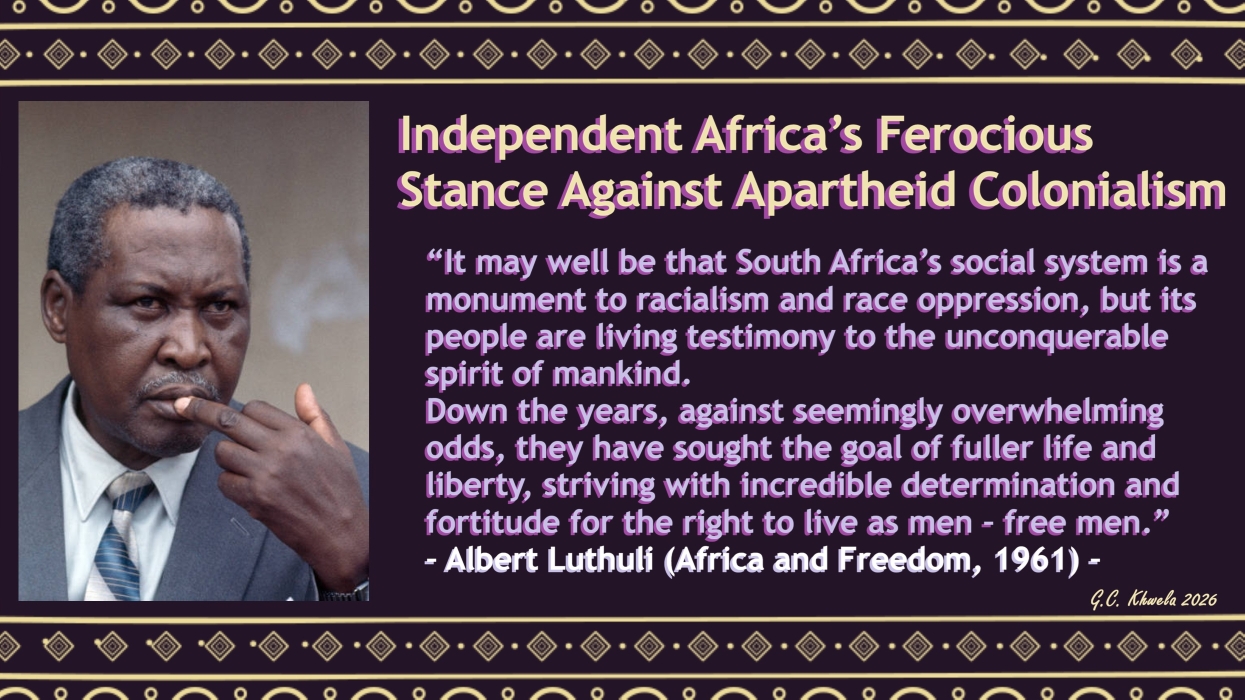
Independent Africa’s Ferocious Stance Against Apartheid Colonialism
Sixty-five years ago, on 11 April 1961, Nigeria officially imposed a total trade boycott and strict economic sanctions on South Africa to oppose its apartheid regime. This historic action included cutting off trade relations, refusing to import goods, and restricting flights to combat the discriminatory policies of the time. Following rising opposition to apartheid, Nigeria took an early, firm stance in 1961 by banning South African products. Nigeria tightened these measures by restricting South African aircraft from using its airspace and banning imports, aiming to isolate the South African economy.
As the Chair of the United Nations Special Committee against Apartheid, Nigeria served and actively worked to create a worldwide movement against the regime. Beyond sanctions, Nigeria provided significant monetary aid – sometimes millions of dollars annually – to liberation movements like the African National Congress (ANC). Scholarships were also provided to South African students to study in Nigeria, fostering solidarity against the regime.
The Independent States of Africa, and other friends of South African freedom abroad, had in the past on many occasions shown their contempt for apartheid and their solidarity with the people of South Africa. These actions were in line with the third All-African People’s Conference, held in Cairo, on 25 – 31 March 1961, which appealed to all African States “and other freedom loving countries of the world” to sever diplomatic relations with South Africa; boycott South African goods; close their seaports and airports to South African craft; restrict and halt the stream of migratory labour to SA mines and factories; and urge the trade union movement in Africa “and throughout the world” to refuse to handle cargo to and from South Africa.
As a follow-up these developments, the then President-General of the African National Congress (ANC) of South Africa, Inkosi Albert Luthuli, appealed “to all governments throughout the world, to people everywhere, to organisations and institutions in every land and at every level, to act now to impose such sanctions on South Africa that will bring about the vital necessary change and avert what can become the greatest African tragedy of our times.”
“It may well be that South Africa’s social system is a monument to racialism and race oppression, but its people are living testimony to the unconquerable spirit of mankind. Down the years, against seemingly overwhelming odds, they have sought the goal of fuller life and liberty, striving with incredible determination and fortitude for the right to live as men – free men.” – Albert Luthuli (Africa and Freedom, 11 December 1961).
Sources:
Wikipedia.
South African History Online (SAHO).
Editorial Notes, “The Apartheid Republic”, The African Communist, No. 6, July 1961.
Gerald Pillay, “Albert Luthuli: Voices of Liberation”, Human Sciences Research Council, 2012.
Castro Khwela
Good morning fellow Compatriots!🙏🏾✊🏾👊🏾
Discover more from CASTRO KHWELA
Subscribe to get the latest posts sent to your email.