On 6 December 1977, Zambian President Kenneth David Kaunda refused to take part in talks that only involved the so-called moderates in Zimbabwe, excluding the Zimbabwe African National Union (ZANU) and Zimbabwe African People Union (ZAPU).
Abel Muzerewa, Ndabaningi Sithole and James Chikerema, all “moderate nationalists” in the resistance movement, signed an agreement with the racist Ian Smith Rhodesian regime that was to be known as an “Internal Settlement” on 3 March 1978.
Kenneth Kaunda was considered a key figure in the continuing conflict between Zimbabwean liberation movements and Ian Smith’s racist Rhodesia. Zambia offered military bases for both Robert Mugabe’s Zimbabwe African National Union (ZANU) and Joshua Nkomo’s Zimbabwe African People Union (ZAPU).
Following the assassination of Hebert Chitepo, in Lusaka, in 1975, ZANU and its military wing, the Zimbabwe African National Liberation Army (ZANLA), under the leadership of Josiah Tongogara, grew suspicious of Kaunda and left Zambia to seek asylum in Mozambique in 1976. Once safely ensconced in Mozambique, ZANLA increased the number of attacks on Rhodesia, engaging Smith’s forces along the eastern frontier for much of 1977.
ZAPU’s military wing, the Zimbabwe People’s Revolutionary Army (ZIPRA) continued to launch its attacks on the western border, with bases in Tanzania, Angola and Zambia. It was these attacks during 1977 that forced Smith to agree to talks at the end of 1977.
These talks resulted in the “Internal Settlement”, which was an agreement that was signed on 3 March 1978 between Prime Minister of racist Rhodesia, Ian Smith, and the African “moderate nationalists” leaders comprising Bishop Abel Muzorewa, Ndabaningi Sithole and Senator Chief Jeremiah Chirau.
After almost 15 years of the Zimbabwean War of Liberation (aka “Rhodesian Bush War”), and under pressure from the sanctions placed on Rhodesia by the international community, and political pressure from apartheid South Africa, the United Kingdom and the United States, the racist Rhodesian government met with some of the internally based African “moderate nationalists” leaders in order to reach an agreement on the political future for the country.
The agreement led to the creation of an interim government in which Africans were included in leading positions for the first time. This in turn was to lead to the achievement of the settlement’s main goal, which was for the country to regain international recognition. Recognition implied that sanctions imposed on Rhodesia, which came about as a result of the announcement of the Unilateral Declaration of Independence (UDI) of 1965, would be abolished.
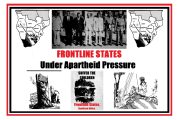
However, each of the Frontline States – Angola, Botswana, Mozambique, Tanzania and Zambia – rejected the settlement as a “sell-out” and condemned Muzorewa, Sithole and Chirau of being complicit with the Rhodesian government, which they perceived to be illegal.
The previous year, on 21 August 1977, in an interview with the Stockholm newspaper, “Dagens Nyheter”, which was undertaken in Lusaka, Zambia, President Kenneth Kaunda accused United States’ former Secretary of State Henry Kissinger of having failed the Zimbabwean peace talks. Kaunda mentioned that he told Kissinger “that he couldn’t succeed so long as Smith, a very slippery eel, remained. But Mr Kissinger assured me he would deliver Mr Smith on a silver platter”.
On 5 October 1977, “The New York Times” newspaper reported that Kaunda had secretly met with Ian Smith and his ten men Rhodesian delegation in Lusaka on 25 September 1977. According to diplomatic reports, Smith was faced with mounting military and diplomatic pressure and was compelled to meet with Kaunda to discuss British-American proposals for steps towards majority rule in Rhodesia.
The Council of Ministers of the Organisation of African Unity (OAU) had foreseen the prospect of an Internal Settlement at its Thirtieth Ordinary Session in Tripoli, Libya, from 20 to 28 February 1978, and issued a statement condemning any agreement that did not include the Patriotic Front.
The Patriotic Front, composed of ZANU and ZAPU, also condemned the settlement and similarly accused the three black signatories of being Rhodesian puppets. It vowed to continue fighting until attaining a military victory in the war. Edgar Tekere, ZANU’s firebrand Executive Committee member, declared 1978 “the year of fire and brimstone”, as attacks into Rhodesia increased in intensity and frequency during 1978.
Ultimately, South Africa, the US and Britain put pressure on Smith to enter into meaningful talks that would include ZANU and ZAPU. These talks were to begin in the second half of 1979, concluding in the famous Lancaster House Agreement brokered by Britain’s Lord Carrington, leading to Zimbabwe’s independence in 1980.
Castro Khwela
Good day fellow Compatriots!
Discover more from CASTRO KHWELA
Subscribe to get the latest posts sent to your email.