
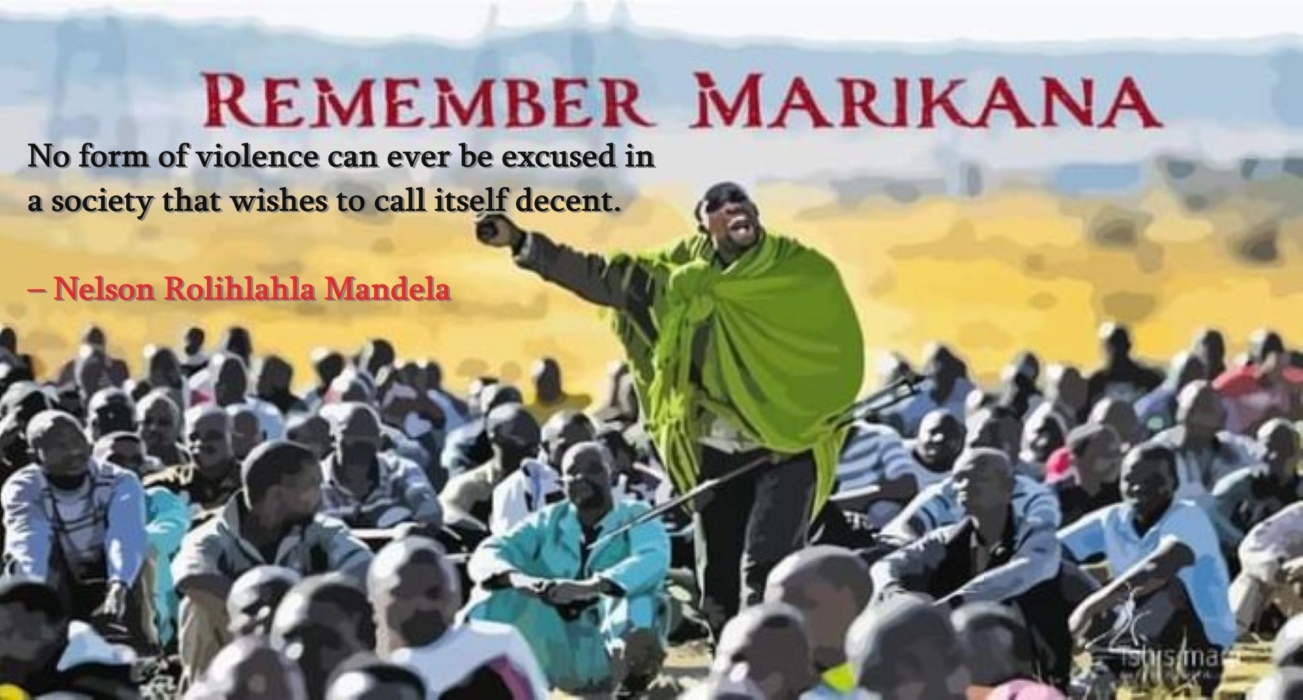
Remembering the Marikana Massacre
Yesterday we observed the 13th Anniversary of the vicious Marikana Massacre, which occurred on 16 August 2012 in a supposedly benevolent post-apartheid South Africa. Following the analysis of conditions that led to the massacre, the South African Communist Party (SACP) inferred that, “It is therefore not inconceivable that the democratic government could face a wider revolt similar to what we have seen in Marikana, if we do not urgently tackle the destructive nature of capitalist production” (African Communist, November 2016).
Regardless of various political and socio-economic advances, years of pursuing neoliberal policies since 1994, have reinforced the legacies of apartheid colonialism, emphasising racial, regional and gender inequalities, deepening economic marginalisation of the formerly oppressed and exploited sectors of the population, and perpetuating systemic poverty and unemployment.
The pursuit of neoliberalism has failed to ensure the dismantling of the structural machinations of what was defined as colonialism of a special type. The current post-colonial state’s capacity has been weakened to such an extent that it is incapable of providing leadership towards the attainment of an effective transformative agenda.
Capitalism has not only entrenched structural inequality and poverty but has also encouraged the concentration of wealth in the hands of a few, thus perpetuating the historical injustices and deepening the socio-economic divide.
The only solution to the current crisis is a conscious pursuit of the National Democratic Revolution as envisioned in the Freedom Charter, which must address the socio-economic crises and the structural legacy of colonialism of a special type.
Visionary leadership is critical towards ensuring working-class leadership in advancing the National Democratic Revolution and rejecting shallow bourgeois reformist agendas that are incapable of extricating the country from perpetual crisis of unemployment, poverty and glaring inequality.
Castro Khwela
Good morning Sons and Daughters of the Working People!🙏🏾✊🏾👊🏾
Discover more from CASTRO KHWELA
Subscribe to get the latest posts sent to your email.


