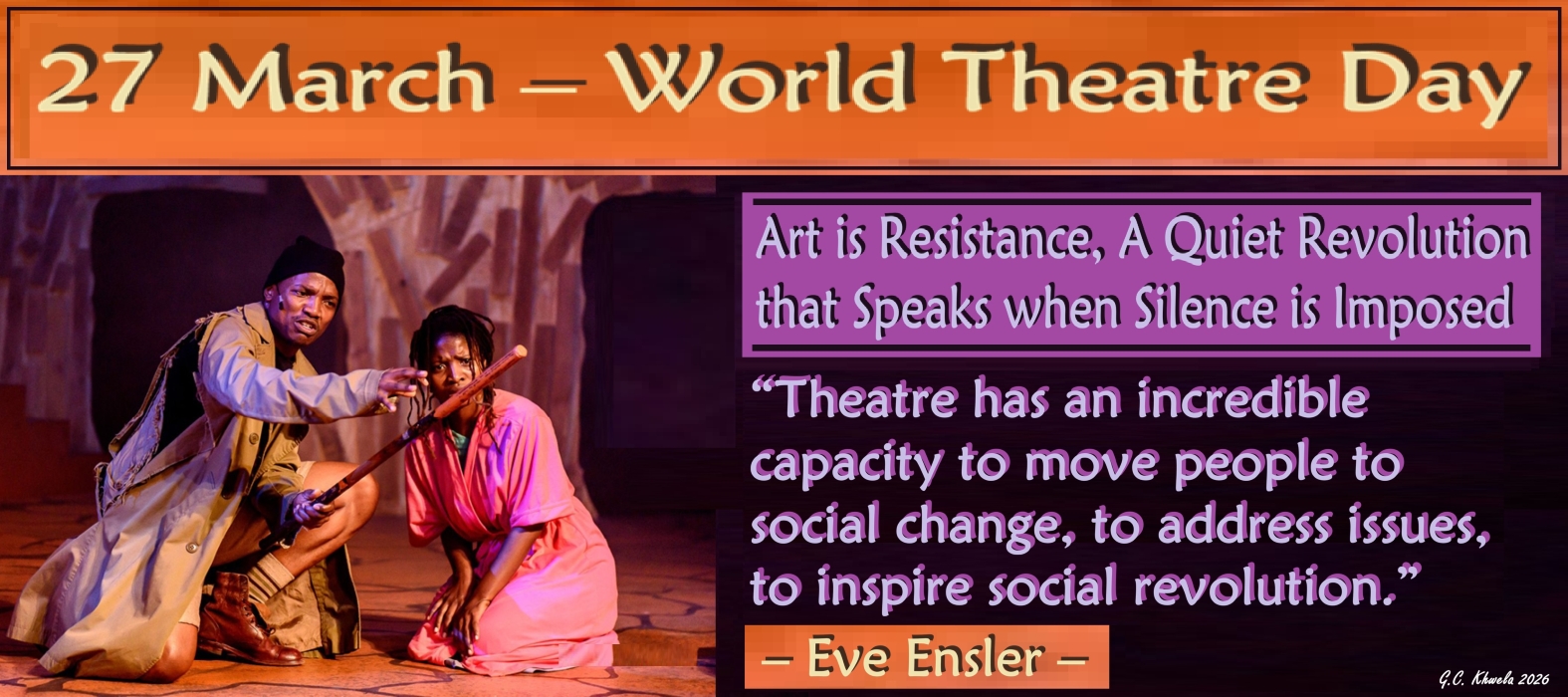
27 March – World Theatre Day
“Theatre as a total art form can make us see what was, what is and what our world could be.”
– Willem Dafoe, Message for World Theatre Day 2026 – 27 March
World Theatre Day, which is celebrated annually on March 27 since 1962, is a global initiative by the International Theatre Institute (ITI) to promote theatre arts, highlight their value, and encourage international cultural exchange. It serves to remind governments and institutions of the power of theatre in fostering freedom, peace, empathy, and economic growth.
The day is celebrated worldwide by theatre communities, professionals, and enthusiasts, aiming to showcase the value of the art form. It honours the role of theatre in creating a “mirror to society” and provides a platform for emerging artists to showcase their talent through workshops and performances. Initiated by the ITI and UNESCO, the day encourages a focus on social justice, understanding, and the sharing of stories across different cultures.
What is significant about this day is that it aims to promote theatre in all its forms – from grand productions to local community plays – and to share the joy of the art form with the public. The day highlights the work of writers, designers, and technicians, often featuring backstage tours and open rehearsals to demystify the creative process.
Theatre also features strongly in telling African stories. African theatre acts as a tool for liberation from colonialism and imperialism, for peace, social commentary, and preserving cultural identity through storytelling. While vibrant, African theatre faces challenges like limited funding and a need for better archiving, particularly in South Africa. The goal is to bring more authentic African stories to global audiences.
What is fascinating about African theatre, is that it is often described as “Total Theatre”, a style that integrates multiple art forms, including dance, music, storytelling, and ritual, into a single performance. One of these types of Total Theatre is Township theatre, which is a dynamic South African performance style originating in the 1960s as a form of protest against apartheid, characterised by music, dance, storytelling and minimal sets. Emerging from black urban residential areas, it uses venues like community halls and backyards to explore local social issues and daily life, often acting as a tool for political expression, community empowerment, and youth development.
Thus, World Theatre Day serves as a platform to celebrate the diversity of African performance, from ritualistic and community theatre to major productions at iconic venues like the Market Theatre in Johannesburg and the South African State Theatre in Pretoria. Institutions like the Lesedi Cultural Village in South Africa use performance to preserve and showcase the traditions of various ethnic groups, such as the Khoi, San, Zulu, Xhosa, Basotho, Tswana, Tsonga and Venda.
Contemporary African theatre continues to evolve, with festivals and workshops like the National Arts Festival in South Africa providing platforms for new and challenging works that address modern societal issues. African theatre practitioners often use the day to advocate for better funding, audience development, and access to the arts, particularly for children and those in rural areas.
“To erase Black history is to erase truth itself. We are not just stories of struggle; we are stories of strength, of brilliance, of revolution. We are the architects of culture and change.” – Black History Month Quotes
Castro Khwela
Good morning fellow Compatriots!🙏🏾✊🏾👊🏾
Discover more from CASTRO KHWELA
Subscribe to get the latest posts sent to your email.