Ghana Imposes Sanctions Against Apartheid South Africa
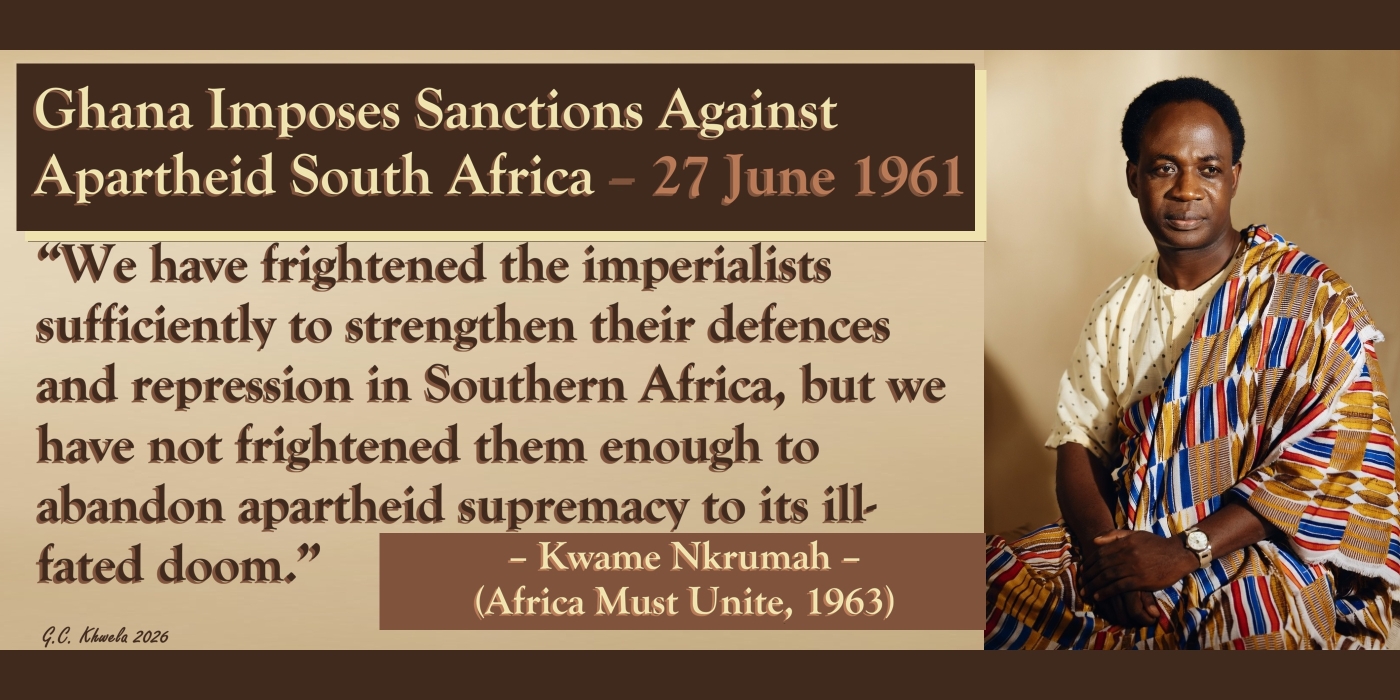
On 27 June 1961, the government of Ghana imposed a total ban on the export of all Ghanaian produce to South Africa and South West Africa, as a protest against apartheid. This export ban was part of a multilateral arrangement driven by the Pan-African movement and collective resolutions passed by independent African states. The decision stemmed directly from multilateral agreements made during the Second Conference of Independent African States held in Addis Ababa in June 1960. Member states collectively resolved to institute a total economic and diplomatic boycott against South Africa to isolate the apartheid regime.
Led by President Kwame Nkrumah, Ghana enacted the total export ban on 27 June 1961 to fulfil these multilateral Pan-African commitments while simultaneously lobbying the United Nations to enforce broader international sanctions. Following the landmark June 1960 Addis Ababa Resolution, several newly independent African nations enacted parallel trade bans, airspace closures, and maritime blockades to economically isolate the apartheid regime. For example, Ethiopia, which served as the diplomatic hub for the sanctions movement; immediately banned all imports of South African goods and denied landing and overflight rights to South African aircraft.
Nigeria also followed suit, by terminating all trade ties upon gaining independence; blocked South African white immigrants from entering the country unless they explicitly signed an anti-apartheid declaration. The Ivory Coast (Côte d’Ivoire) also enacted a complete shutdown of its infrastructure to South African transit on 16 July 1963, formally closing all of its seaports and airports to South African vessels and planes. Tanganyika (now Tanzania), under Julius Nyerere, implemented a strict commercial boycott of South African goods; aggressively banned South African aircraft from using its strategic East African airspace.
The United Arab Republic (Egypt) severed all remaining diplomatic and commercial relations; barred South African shipping from accessing key regional maritime facilities. The Sudan prohibited South African aircraft from crossing its airspace, forcing South African Airways (SAA) to completely reroute its European flights around the ‘bulge’ of West Africa at a massive financial cost. This also led Algeria to enforce total economic and diplomatic isolation immediately upon winning its independence in 1962, providing a base for liberation movements.
These parallel bans effectively created a continental blockade across West, East and North Africa. South African ships were barred from refuelling, and South African aircraft were denied passage, forcing airlines to fly long, costly detours over the Atlantic Ocean to reach Europe. The direct impact of the measures imposed by independent African states in the early 1960s was economically limited but highly disruptive operationally, strategically expensive and psychologically devastating for South Africa’s international standing. While the trade bans failed to cripple the South African economy, the infrastructure blockade forced massive, costly structural adaptations.
The efficacy of these measures could be broken down into several distinct areas of impact. The most effective and immediate direct blow came from the airspace bans enacted following the 1963 Addis Ababa summit. When Egypt, Sudan, Ethiopia, Algeria, and Libya denied landing and overflight rights, South African Airways (SAA) was forced to bypass the entire continent. SAA had to reroute its European flights around the western ‘bulge’ of Africa via Luanda and the Spanish Canary Islands. This detour added roughly 3,000 kilometres and two hours to every flight to Europe. It cost an estimated additional $3,000 per one-way trip at the time, severely eating into the airline’s profit margins and creating an ongoing, multimillion-dollar logistics penalty that lasted until the ban was finally lifted in June 1991.
The direct trade boycotts imposed by Ghana and other newly independent African nations did not severely damage South Africa’s macroeconomic growth in the 1960s, for two major reasons. Independent Black African states constituted only a fraction of South Africa’s export market. Pretoria’s primary economic lifelines were heavily tied to Western powers – specifically the United Kingdom, the United States, West Germany and Japan – none of which joined the early embargoes. Furthermore, South Africa leveraged its alliance with neighbouring colonial regimes, which included Portuguese-ruled Angola and Mozambique, as well as Ian Smith’s white-minority ruled Southern Rhodesia, to reroute and disguise its trade, creating immediate regional workarounds.
Inadvertently, the African continental blockade forced South Africa to heavily invest in its own self-sufficiency, adapting early to counter future global isolation. The apartheid government was forced to quietly fund and construct a massive $5.3 million jet airport on the Cape Verde island of Sal, which was then a Portuguese territory, to serve as an island-hopping refuelling base in order to sustain its vital aviation link to Europe. The early sting of African bans drove South Africa to aggressively prioritise state-backed import-substitution industries. This catalysed the rapid development of local arms manufacturing (ARMSCOR) and strategic energy infrastructure (such as SASOL coal-to-oil refineries) to bulletproof the regime against further UN-led actions.
While the financial losses from the trade bans were absorbed, the diplomatic campaign spearheaded by African states succeeded in codifying South Africa’s isolation. By forcing Pretoria out of regional bodies (like the UN Economic Commission for Africa) and establishing the UN Special Committee against Apartheid, independent African nations laid the foundational legal and moral framework that eventually convinced Western nations to implement the devastating financial sanctions of the mid-1980s.
President Kwame Nkrumah utilized Ghana’s position at the United Nations to spearhead a relentless global diplomatic campaign against white minority rule and colonialism in Southern Africa. Anchored by his philosophy that “the independence of Ghana is meaningless unless it is linked up with the total liberation of Africa”, he aggressively leveraged the UN to scale African regional agreements into a worldwide blockade against the apartheid regime. Nkrumah transformed regional, multilateral commitments – such as the June 1960 Addis Ababa resolution passed by independent African states – into a global UN agenda. Following Ghana’s total domestic ban on South African produce on 27 June 1961, he took to the UN stage to demand matching global intervention.
On 22 March 1961, Nkrumah used the UN framework to call on all world leaders to implement immediate diplomatic, political, and economic sanctions against Pretoria. Ghana’s aggressive lobbying helped secure the passage of UN General Assembly Resolution 1761 in November 1962. This landmark resolution officially urged member states to break diplomatic relations with South Africa, boycott its goods, and close ports to its vessels. It also established the UN Special Committee against Apartheid, which Nkrumah believed should assist in ensuring that the apartheid government was stripped of the legitimacy and privileges of global governance.
Ghana led the charge within the UN network to systematically isolate South Africa from functional and technical agencies. This coordinated diplomatic pressure successfully forced South Africa out of the World Health Organisation (WHO), the International Labour Organization (ILO), and the UN Economic Commission for Africa (ECA). Nkrumah repeatedly used the UN General Assembly podium to expose what he termed the “Unholy Alliance” in Southern Africa – a mutual-defence pact between South Africa, Portugal (ruling Angola and Mozambique), and the white minority government of Southern Rhodesia (now Zimbabwe). He openly condemned Western powers at the UN for funding and arming Pretoria and Lisbon, arguing that Western capital directly subsidised the repression of Black Africans under the guise of Cold War containment.
In the mid-1960s, Nkrumah utilised the UN Security Council to warn against a unilateral declaration of independence by Ian Smith’s white minority government in Southern Rhodesia, demanding that the UN enforce a “one man, one vote” democratic transition. He fought to change how the UN viewed anti-apartheid resistance, shifting the definition of freedom fighters from ‘insurgents’ to legitimate political actors. In addition, he successfully campaigned for the UN to recognise the African National Congress (ANC) and the Pan Africanist Congress (PAC) as the true, authentic representatives of the South African people.
By using Accra as a safe haven and issuing Ghanaian diplomatic passports to exiled South African freedom fighters, Nkrumah gave these movements the physical and legal mobility required to present their testimonies directly before UN sub-committees. Alongside his high-profile UN diplomacy, President Kwame Nkrumah established an extensive, often covert apparatus in Accra to provide liberation movements with direct financial lifelines, logistics, and paramilitary training. Nkrumah viewed Ghana as the operational base for the “total liberation of Africa”, heavily shifting resources toward Southern African resistance groups after 1960.
Nkrumah bypassed standard civil service channels to channel state funds directly to liberation movements through specialised institutions. Originally established in 1957 under Trinidadian Pan-Africanist George Padmore, the Bureau of African Affairs (BAA) functioned as a clearinghouse for political and financial aid. It paid direct cash stipends to exiled organisations, including South Africa’s African National Congress (ANC) and the Pan Africanist Congress (PAC), Zimbabwe’s African People’s Union (ZAPU) and the Zimbabwe African National Union (ZANU), as well as Namibia’s South West African People’s Organisation (SWAPO).
The African Affairs Centre, which was located in Accra, as a state-funded compound, it provided free housing, medical care, and monthly allowances to hundreds of exiled freedom fighters. It allowed banned organisations to establish functional, rent-free external headquarters to manage their international campaigns. As peaceful decolonisation stalled in settler-dominated Southern Africa, Ghana shifted from political solidarity to hosting covert military training camps.
The Half Assini Camp, which was located in Western Ghana, this secure military installation was used to train Southern African cadres in guerrilla tactics, sabotage, and subversion. At the Obenemasi Camp, Ghana brought in specialised Soviet, Chinese, and Cuban instructors to train African dissidents in espionage, urban warfare and wireless communication. Select freedom fighters were subtly embedded into regular units of the Ghana Armed Forces to receive advanced conventional military officer training.
Following the March 1960 Sharpeville Massacre and the subsequent banning of liberation movements in South Africa, activists faced immediate arrest if they attempted to cross borders. Nkrumah ordered the Ghanaian state to issue Ghanaian diplomatic passports to targeted South African, Rhodesian and Namibian exiles. These documents provided freedom fighters with legal cover, letting them bypass Western border controls, travel to international conferences and safely access UN sub-committees to testify against white minority regimes.
Furthermore, Nkrumah understood that controlling the information space was vital to sustaining an armed struggle from thousands of miles away. The Ghanaian government built a powerful external broadcasting system consisting of Shortwave Transmitters in Accra – the Voice of Africa – dedicated to transmitting anti-colonial propaganda. Ghana provided dedicated radio slots and state-funded printing presses to the ANC, PAC, and other regional liberation movements. This allowed them to record revolutionary broadcasts and print political publications that were subsequently smuggled back into Southern Africa to boost domestic morale.
Unfortunately, this pipeline of financial and military assistance came to an abrupt halt on 24 February 1966, when Nkrumah was overthrown in a military coup d’état. The successor military regime, the National Liberation Council (NLC), immediately shut down the secret training camps, expelled Soviet and Cuban instructors, and evicted the Southern African liberation movements from Accra to align Ghana’s foreign policy closer to the West.
The South African apartheid government also responded to early UN campaigns with a highly aggressive, calculated mixture of diplomatic defiance, domestic legal crackdowns, and a massive militarisation drive. Instead of capitulating, Prime Minister Hendrik Verwoerd’s regime weaponised the international pressure to rally white domestic support and fortify the state against global isolation. Pretoria’s counter-strategy relied on numerous primary mechanisms, which included diplomatic shielding via the UN Charter (Article 2, Paragraph 7).
South Africa’s primary legal defence at the UN was a rigid, unyielding invocation of sovereign immunity. Pretoria continuously argued that its apartheid policies were strictly an internal sovereign matter. They asserted that UN resolutions violated Article 2 (7) of the UN Charter, which explicitly prohibits the United Nations from intervening in matters “essentially within the domestic jurisdiction of any state”. South African officials routinely released dismissive, derogatory statements regarding the UN. They claimed the General Assembly was being held hostage by emotional, newly independent African and Asian nations that lacked geopolitical substance.
Pretoria successfully blunted the immediate sting of UN campaigns by positioning itself as an indispensable anti-communist fortress in the Southern Hemisphere. It aggressively framed Kwame Nkrumah’s pan-African lobbying, Soviet-backed liberation camps, and UN resolutions as part of a coordinated communist plot to destabilise the Cape Sea Route. This strategy effectively convinced major Western veto-wielding powers – specifically the United Kingdom, the United States and France – to ignore General Assembly calls for total embargoes. Throughout the 1960s, these nations actively boycotted the newly formed UN Special Committee against Apartheid, ensuring South Africa’s core economic lifelines remained completely intact.
As international condemnation grew following the 1960 Sharpeville Massacre, the regime responded domestically by-passing Draconian laws to systematically crush the very liberation movements Nkrumah was harbouring. The apartheid state passed the Unlawful Organisations Act (1960) to officially ban the ANC and PAC and also introduced the General Laws Amendment Acts (such as the 90-day and 180-day detention clauses), which allowed the police to arrest anti-apartheid activists without a warrant, holding them in solitary confinement without legal representation. This legal framework directly enabled the state to neutralise internal resistance, culminating in the 1963 – 1964 Rivonia Trial which jailed Nelson Mandela and other top leaders.
Sensing that the UN voluntary arms embargoes of 1963 (Resolution 181) could eventually become mandatory, South Africa pivoted toward immediate industrial and military independence. Pretoria poured capital into creating its own state-owned weapons procurement and manufacturing conglomerate, ARMSCOR. By acquiring licensing agreements from sympathetic European companies (such as French firms for Mirages and Italian firms for Impala jets), South Africa bypassed UN restrictions and built the most powerful military machine on the continent. The government mandated the building of massive underground crude oil reserves and funded domestic import-substitution agencies (like SASOL for coal-to-oil synthesis) to bulletproof the country against any future global blockade.
South Africa’s national liberation movements – primarily the ANC and the PAC – responded to Pretoria’s defiance of the UN and its subsequent domestic clampdown by abandoning non-violence, launching armed struggles, and establishing permanent missions in exile. Recognising that Pretoria’s state-backed “fortress economy” and Western UN vetoes blocked peaceful change, the liberation movements systematically shifted their resistance strategy along several primary paths. The movements concluded that South Africa’s violent suppression of peaceful protest (such as the 1960 Sharpeville Massacre) and its dismissal of UN moral authority meant legal avenues of resistance were permanently closed.
While the liberation movements welcomed UN resolutions, Pretoria’s ability to exploit Cold War geopolitics and Western business interests led to profound tactical scepticism. ANC and PAC leadership grew disillusioned with the UN’s inability to enforce its resolutions, as Western powers routinely blocked binding economic embargoes. Seeing the UN’s immediate limits, the liberation movements shifted focus away from the formal UN halls and directly toward the Anti-Apartheid Movement (AAM) and international civil society to build a grassroots global consumer and sports boycott.
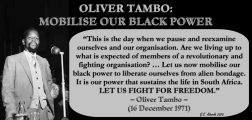
To counter South Africa’s rapid domestic militarisation and mass arrests, the movements used the external sanctuaries secured for them by leaders like Kwame Nkrumah. Leaders like Oliver Tambo successfully lobbied the newly formed Organisation of African Unity (OAU) for direct material backing. Because the UN would not provide weapons, the liberation movements used their African diplomatic conduits to establish formal military pacts with the Soviet Union, China and Cuba. Cadres were sent abroad to receive the specialised training in guerrilla warfare needed to infiltrate Southern Africa’s heavily fortified borders.
Sources:
South African History Online (SAHO).
Ram C. Malhotra, “Interim Report of the Special Committee on the Polices of Apartheid of the Government of the Republic of South Africa”, United Nations General Assembly, 9 May 1963.
E.S. Reddy, “The Anti-Apartheid Movement – 1959–1979”, Paper Presented by the Anti-Apartheid Movement at a Conference on “Southern Africa in the 1980’s”, held in London on 26 June 1979.
Aaron Griffiths with Catherine Barnes (Eds.), “Powers of Persuasion Incentives, Sanctions and Conditionality in Peacemaking”, Conciliation Resources, 2008.
Jeffrey S. Ahlman, “Road to Ghana: Nkrumah, Southern Africa and the Eclipse of a Decolonizing Africa”, Kronos: Southern African Histories, Vol. 37, 2011.
Rosie Scammell, “The ANC’s Disillusionment with the UN”, European University Institute, 22 March 2013.
Matteo Grilli, “Nkrumah, Nationalism, and Pan-Africanism: The Bureau of African Affairs Collection”, Vol. 44, June 2017.
Matteo Grilli, “Nkrumah’s Ghana and the Armed Struggle in Southern Africa (1961-1966)”, South African Historical Journal, Vol. 70, No. 1, 2018.
Matteo Grilli, “Southern African Liberation Movements in Nkrumah’s Ghana”, Oxford Research Encyclopedia of African History, 20 July 2020.
Kwesi Aning, “Ghana Armed Forces’ Contributions to African-Led Peace Support Operations from 1990-2020”, Journal of International Peacekeeping, Vol. 26, No. 4, December 2023.
Castro Khwela
Good morning fellow Compatriots!🙏🏾✊🏾👊🏾
Discover more from CASTRO KHWELA
Subscribe to get the latest posts sent to your email.