Recalling Jabulani “Mzala” Nxumalo: 35 Years On
On 22 February 1991, Jabulani Nobleman “Mzala” Nxumalo died in London at the age of 35. The African National Congress (ANC) and its alliance partner, the South African Communist Party (SACP), were robbed of one of their most prolific writers, a revolutionary intellectual and thinker, as well as a gallant guerrilla fighter with Mzala’s death. His death was considered to be a huge loss to the entire South African people at a time when his analytical skills were hugely needed inside the country during the negotiations process and at a time when the ANC needed to rebuild itself inside the country.
Jabulani Nobleman Nxumalo, fondly known as “Mzala” in the national liberation struggle, was born on 27 October 1955 in Ngoje, a predominantly rural village between Vryheid and Dundee, in northern Natal. From an early age, his school-teacher parents inculcated in him a disciplined approach to studying. At both primary and secondary schools, his record was outstanding, as he was a prolific debater, a poet, a black belt karate devotee and enjoyed jazz and choral music.
Mzala attended school at Louwsburg, then went to Bethal College in Butterworth and later matriculated at KwaDlangezwa in Empangeni. In 1972, at the age of 15, he was detained without trial for his role in a school boycott at KwaDlangezwa High School, which is a stone throw from the University of Zululand. The following year, he was arrested again and charged with public violence for his part in students’ uprisings and workers’ strikes.
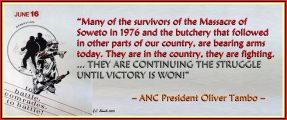
After Matric, he studied law at the University of Zululand, Ongoye, where he was active in the South African Student Organisation (SASO) and in 1976, like thousands of his generation, fled the country into exile. His participation in the countrywide upsurge, particularly at Ongoye, following the Soweto Uprisings of June 1976, made him a marked man. With a number of others, he left South Africa to help swell the ranks of the people’s army, Umkhonto we Sizwe (MK).
Mzala began his military training as part of the famous June 16 MK Detachment in Novo Catengue, in Benguela, south of Angola, and went to specialise in Military Communications in the Soviet Union, where he was known as Marks Black. From the Soviet Union he was sent to Angola, at Funda camp, 20 kilometres outside Luanda. While still in training at Funda camp, north of Luanda, he was seriously injured in the face by a bullet mistakenly fired during a training exercise. Mzala survived the near-fatal incident and went for treatment at the Military Hospital in Luanda. The incident left him with a permanent scar, a twitching eye, a slightly twisted mouth, and a damaged ear, which in turn led to hearing difficulties.
Following his brief stay at Funda camp, which was meant to prepare cadres for the operational front, in 1977 he was sent to the Soviet Union and the German Democratic Republic (GDR – former East Germany), where he received training in politics and other specialised subjects. In 1977, he was working on a simplified book on Marxism-Leninism in isiZulu and it was clear that his intellectual energies were being recognised in MK. Already in 1977, he was appointed as political instructor and political commissar for Luanda, under Ronnie Kasrils, and in 1978 he also began working intermittently for Radio Freedom, with Pallo Jordan.
Mzala wrote his first article for official journal of the South African Communist Party (SACP), The African Communist, as Ngcambazana Khumalo in 1978, which was titled “The Compromising Role of Inkatha”, in which he argued that the leader of Inkatha, Mangosuthu Gatsha Buthelezi was being groomed by the apartheid regime for an “internal settlement”. In 1979, he was deployed to Lusaka, where he acted as Co-coordinator of the Commissariat Structures. Later on, in 1980, he was sent for advanced ideological and political training in the GDR.
In the same year, 1980, Mzala was sent to Maputo, Mozambique, where he served in the political and military structures with Robben Islanders Jacob Zuma, Idres Naidoo, Riot Mkhwanazi and Shadrack Maphumulo, as well as another June 16 Detachment cadre, Vuso Shabalala (aka “Paul Goitsemang”). in 1983, he was deployed in Swaziland, disguised as a reporter, Jabulani Dlamini, and working for the Swaziland Observer.
In the 1980s, frontline states such as Botswana, Lesotho and Swaziland became extremely dangerous for ANC operatives. The Swazi government had signed a secret accord with the apartheid regime in 1982 to collaborate in the hunting down of ANC networks and cadres. Nxumalo was detained by the Swazi police in 1983 and was deported to Mozambique. In December of the same year, with a new identity, he returned to Swaziland, but this time to the Shiselweni district in the south of the country.
He served as Commissar for the Natal Rural Machinery, a network that was later to become central in the establishment of Operation Vulindlela. While in Shiselweni, and out of his own initiative, Mzala crossed the border into Natal, setting up an MK unit based in Ingwavuma. In 1984, he was again arrested by the Swazi police and deported to Tanzania. In Tanzania, he got married to Mpho Gwangwa and worked for Radio Freedom and the Amandla Cultural Group.
As a delegate to the ANC Conference in Kabwe, Zambia, in 1985, he presented a number of sharp challenges to the Ieadership. Although ever loyal to the movement, Mzala was “a fierce critic of bureaucracy and had no patience with fudge or compromise”. As a member of the Communist Party, he was equally devoted to the national interest of his people, intensely proud of Zulu history and culture. In 1987, he moved to London where he worked for the international committee of the SACP, while he was pursuing his enduring objective to complete his Doctoral studies.
Mzala had a voracious intellectual appetite for books and was constantly engaged in argument and debate with his comrades. He was also a prolific writer for the “African Communist”, “Sechaba” and “Dawn” journals, all containing numerous articles by him, published under various pennames. A look at his articles over the years shows his philosophical, ideological and theoretical development, as well as his well-framed arguments towards achieving a particular objective. Prominent in his writings was a perpetual fascination and intrigue about the national question, more especially the relationship between the national and class struggle in South Africa, which he also lectured extensively on.
He also wrote excessively about the armed struggle, particularly the need to engage the guerrilla forces inside the country. Mzala also authored the controversial book “Gatsha Buthelezi: Chief with a Double Agenda” that put him on the spotlight as an exceptional revolutionary intellectual. The book was well researched and it embarrassed Buthelezi to such an extent that he made every effort to get it removed from bookshelves globally. Mzala maintained that the Bantustan system stifled the national drive and freedom of the African people.
He spent a short time in Prague, at the then Czechoslovakia, representing the SACP on the editorial council of the World Marxist Review. Unfortunately, he took ill and was forced to leave Prague for London, where he ultimately lost his life. His death at the tragically early age of 35, according to Brian Bunting, “deprived South Africa of one of its most brilliant talents at the very period when he was destined to reach the peak of his powers. That he should be snatched from us when he had so much still to give is a grievous loss to the liberation movement.”
In a memorial DPP (Development Policy and Practice Research Group) Working Paper, a draft of an early chapter of his PhD thesis which Mzala presented at St Catherine’s College, Oxford, on 9 October 1989, titled, “The National Question in the Writing of South African History: A Critical Survey of Some Major Tendencies”, Mzala was critical of the manner in which history was captured in South Africa.
According to his assertion, “Strictly speaking, the view that history is above political conflict is itself a political question. The problem, however, does not belong to the historian so much as to the subject-matter of history itself. History embodies explanations and arguments that structure political conclusions, and it is the production of these conclusions which has political effect on concrete and current political problems.”
Mzala maintained that “In the same manner in which politics relies on history for its justification, history relies on politics to justify its explanatory schemes. This explanatory structure deals in connections between events, their causes and their logical motivation. And this is a field of knowledge which typically requires that the historian reconstructing it should understand the conditions and circumstances under which people behaved in one way and not the other.”
Sources:
Wikipedia
South African History Online (SAHO).
Brian Bunting, “Death of Mzala Nxumalo”, We The People of South Africa, London, 23 February 1991.
Jabulani “Mzala” Nxumalo, “The National Question in the Writing of South African History: A Critical Survey of Some Major Tendencies”, DPP (Development Policy and Practice Research Group) Working Paper No 22, March 1992.
Jeremy Cronin, “Blank pages in history should not be allowed: The role of revolutionary intellectuals”, Umrabulo, No. 25, May 2006.
The Presidency SA, “Jabulani Nobleman Nxumalo (1955 – 1991)”, The Presidency, https://www.presidency.gov.za, 27 April 2010.
Percy Ngonyama, “Mzala: A Short Intellectual Biography”, Department of Historical Studies, University of KwaZulu-Natal (Howard College Campus), November 2012.
Percy Ngoyama “Baphi oMzala? — An African Marxist Perspective on the ‘National Question’ in South Africa”, Labour Studies Seminar Series, 27 September 2017.
Mandla J. Radebe, “Mzala Nxumalo — the spectre that haunts Mangosuthu Buthelezi and won’t go away”, Daily Maverick, 27 May 2021.
Mandla J. Radebe, “The Lost Prince of the ANC: The Life and Times of Jabulani Nobleman ‘Mzala’ Nxumalo 1955 – 1991”, Jacana, 2022.
Molaodi wa Sekake, “Ancestors of ontological infidels – in conversation with Mzala Nxumalo”, Culture Review Magazine, 20 February 2023.
Maharajh Rasigan, “Exploring Revolutionary Insights: Prof. Maharajh Rasigan Reviews Mzala Nxumalo – Left Thought and Contemporary SA”, Bottomline, Special Edition 23 May 2024.
Castro Khwela
Good day fellow Compatriots!
Discover more from CASTRO KHWELA
Subscribe to get the latest posts sent to your email.