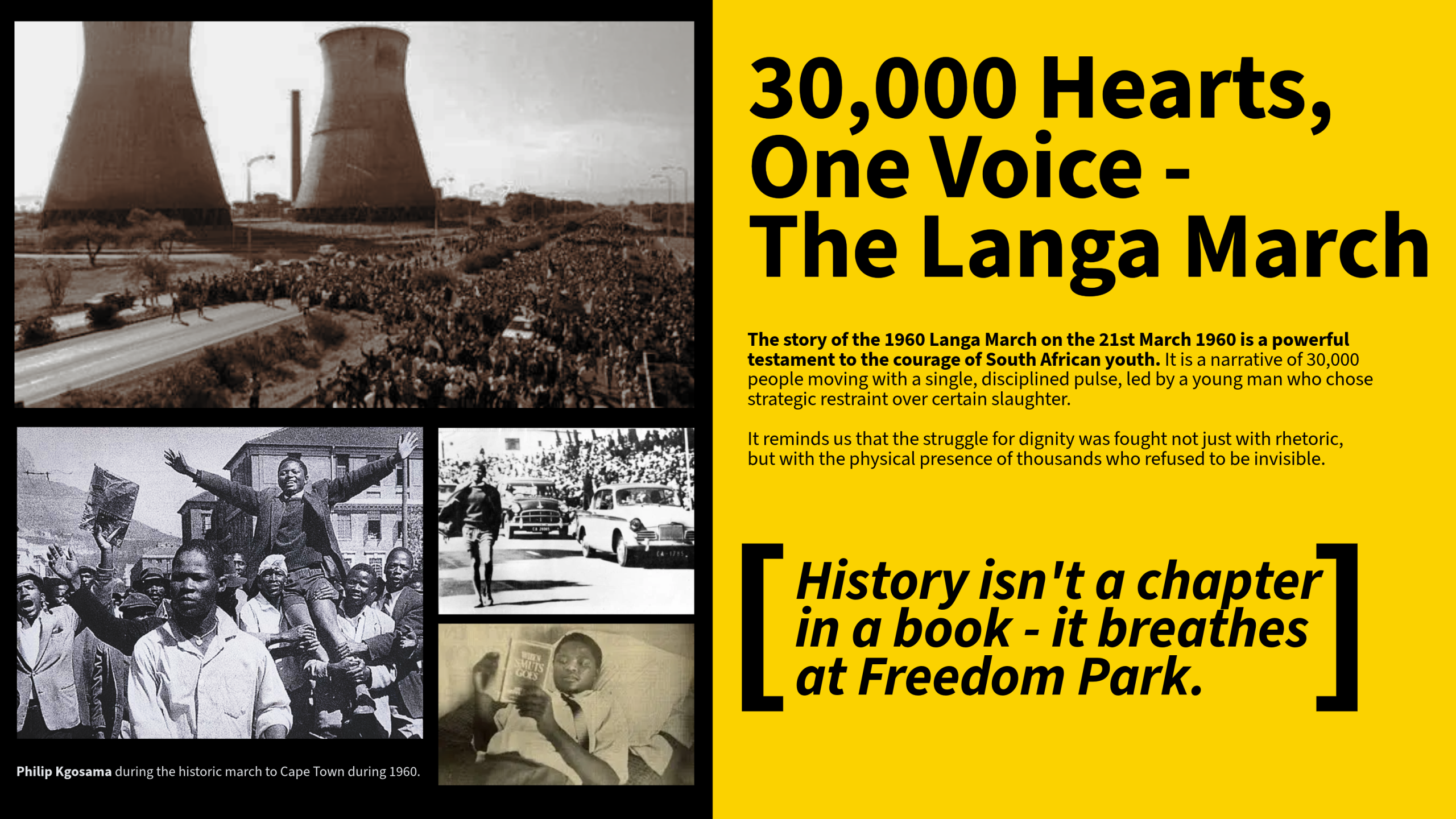
The story of the 1960 Langa March is a powerful testament to the courage of South African youth.
It is a narrative of 30,000 people moving with a single, disciplined pulse, led by a young man who chose strategic restraint over certain slaughter. It reminds us that the struggle for dignity was fought not just with rhetoric, but with the physical presence of thousands who refused to be invisible.
THE DAY CAPE TOWN STOOD STILL
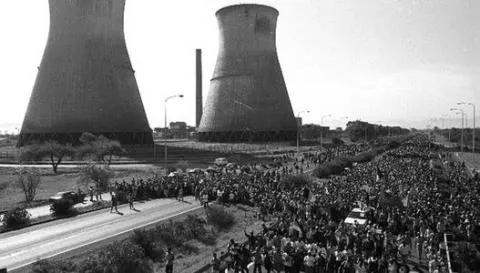
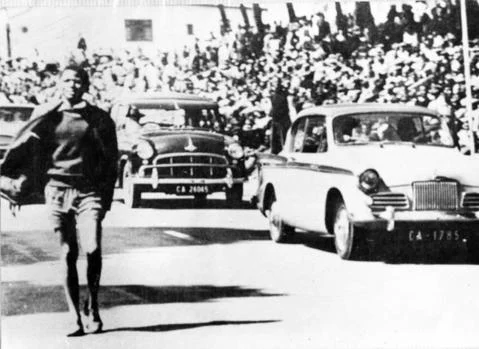
On March 30, 1960, the legislative heart of South Africa was paralyzed. A mile-long column of 30,000 people marched ten miles from Langa and Nyanga into the centre of Cape Town. It was a moment of total state paralysis, where the power of a disciplined, unarmed people forced the apartheid government to a standstill.
THE 23-YEAR-OLD LEADER
At the head of this massive sea of people was Philip Kgosana. Only 23 years old, wearing blue running shorts and a frayed brown jacket, he commanded the total discipline of the crowd. Under his leadership, the marchers did not riot. They sang. They moved with such order that they stepped aside to let suburban traffic pass, proving that the struggle for freedom was led by a generation of immense maturity and restraint.
Langa March: Key Stats
| Event Date | Key Figure | Action Taken | Strategic Outcome |
| March 21, 1960 | Philip Kgosana | Launch of Anti-Pass Campaign in Western Cape. | Massive stay-at-home strike paralyzes Cape Town’s economy. |
| March 25, 1960 | Col. I.B.S. Terblanche | Temporary suspension of Pass Laws in Cape Town. | The first time the Nationalist government retreated in the face of African initiative. |
| March 30, 1960 | 30,000 Marchers | 10-mile disciplined march from Langa to Cape Town. | Total state paralysis; forced negotiations at Caledon Square. |
| April 8, 1960 | Apartheid State | Banning of the PAC and ANC. | Introduction of a State of Emergency and the shift to underground resistance. |
Discover more from CASTRO KHWELA
Subscribe to get the latest posts sent to your email.