On the 21st of March, The Pan-Africanist Congress (PAC), led by its founding President Robert Sobukwe, marched peacefully and unarmed to the Orlando police station in Soweto and demanded to be arrested as they were not prepared to carry pass passbooks.
Simultaneously, on the 21st of March, a university student and member of the PAC, Philip Ata Kgosana, led the very same march in the Cape Province in Langa Township.
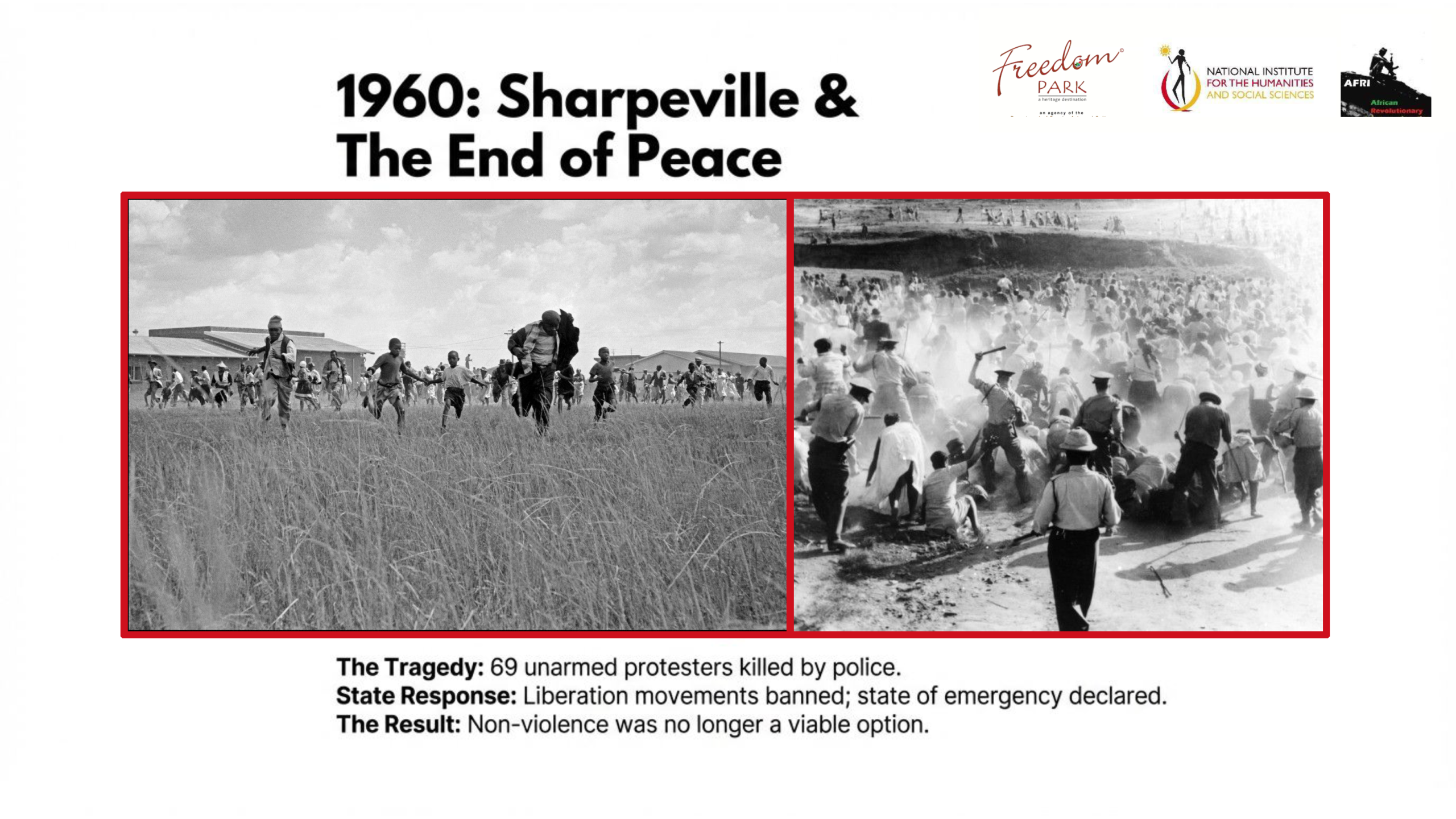
The Sharpeville massacre occurred on 21 March 1960, when police opened fire on a crowd of people who had assembled outside the police station in the township of Sharpeville in the then Transvaal Province of the then Union of South Africa (today part of Gauteng) to protest against the pass laws.
“History breathes. It speaks. It challenges us.”
– Step into the footsteps of heroes today
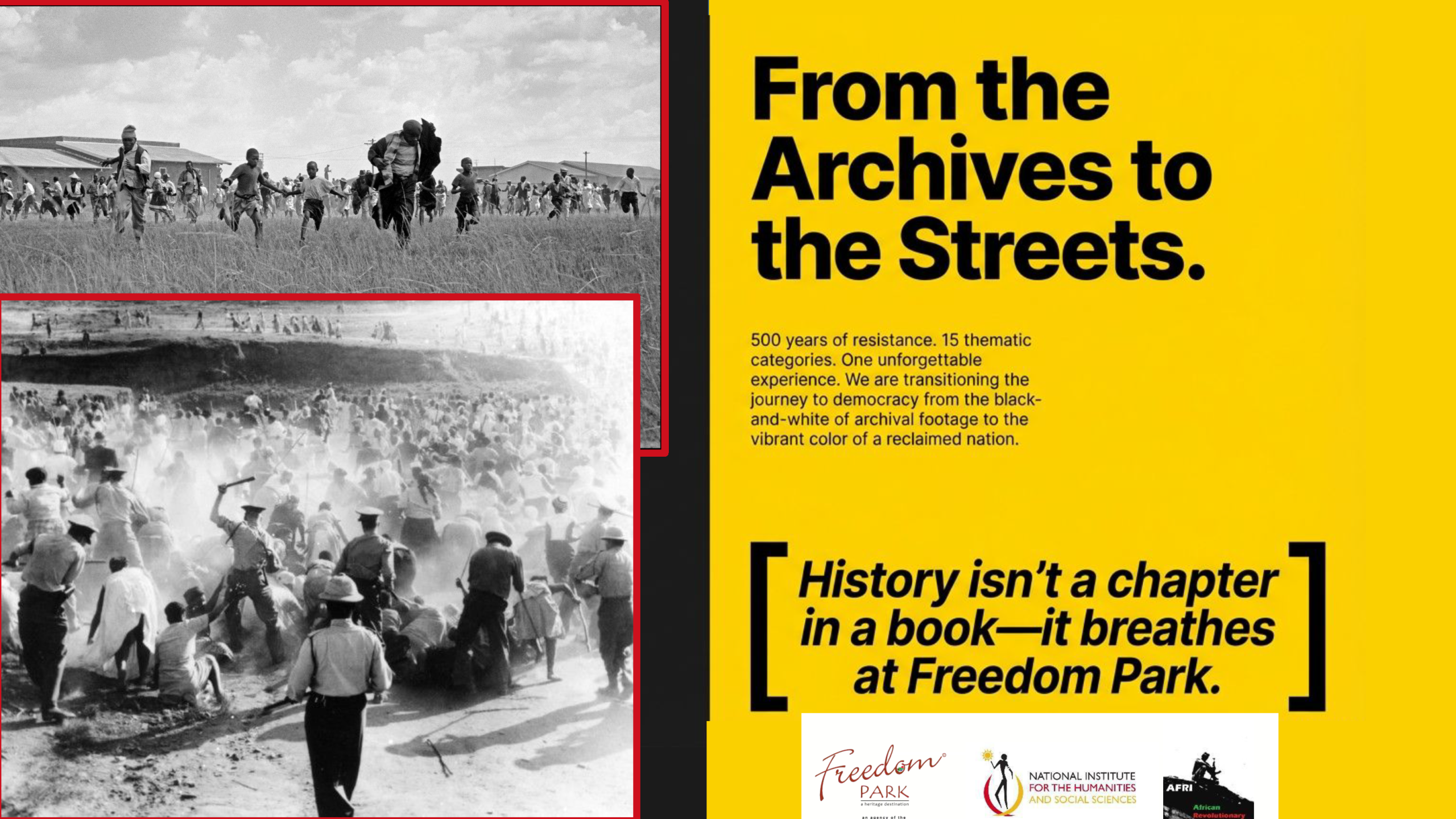
A crowd of approximately 5,000 people gathered in Sharpeville that day in response to the call made by the Pan-Africanist Congress to leave their pass-books at home and to demand that the police arrest them for contravening the pass laws. The protesters were told that they would be addressed by a government official and they waited outside the police station as more police officers arrived, including senior members of the notorious Security Branch. At 1.30 pm, without issuing a warning, the police fired 1,344 rounds into the crowd.
Leading up to the Sharpeville massacre, the National Party administration – under the leadership of the apartheid architect and nicknamed the “father of apartheid”, Dr. Hendrik Verwoerd – used these laws to enforce greater racial segregation and in 1959 extended them to include women. From the 1960s, the pass laws were the primary instrument used by the state to detain and harass its political opponents, particularly the African majority that were denied their South African citizenship.
The PAC actively organized to increase turnout to the demonstration, distributing pamphlets and appearing in person to urge people not to go to work on the day of the protest. Many of the civilians present attended voluntarily to support the protest, but there is evidence that the PAC also used coercive means to draw the crowd there, including the cutting of telephone lines into Sharpeville, and preventing bus drivers from driving their routes.
By 10:00, a large crowd had gathered, and the atmosphere was initially peaceful and festive. Fewer than 20 police officers were present in the station at the start of the protest. Later the crowd grew to about 20,000, and while some news reports described the mood as “ugly”, this has been contested by witnesses who were there, including photographer Ian Berry. 130 police officers supported by four Saracen armoured personnel carriers arrived in Sharpeville. The police were armed with firearms, including Sten submachine guns and Lee–Enfield rifles. There was no evidence that anyone in the gathering was armed with anything other than stones.
F-86 Sabre jets and Harvard Trainers approached to within 30 metres (98 ft) of the ground, flying low over the crowd in an attempt to scatter it. The protesters responded by hurling stones (striking three policemen) and rushing the police barricades. According to some accounts, police officers attempted to use tear gas to repel these advances, but it proved ineffectual, and the police fell back on the use of their batons. However, there is no evidence that the police tried to use teargas to disperse the crowd, or that they charged the crowd with batons. At about 13:00 the police tried to arrest a protester, and the crowd surged forward.
The police began shooting shortly thereafter without issuing a warning to the crowd to disperse.
Reference:
https://en.wikipedia.org/wiki/Sharpeville_massacre
Discover more from CASTRO KHWELA
Subscribe to get the latest posts sent to your email.