
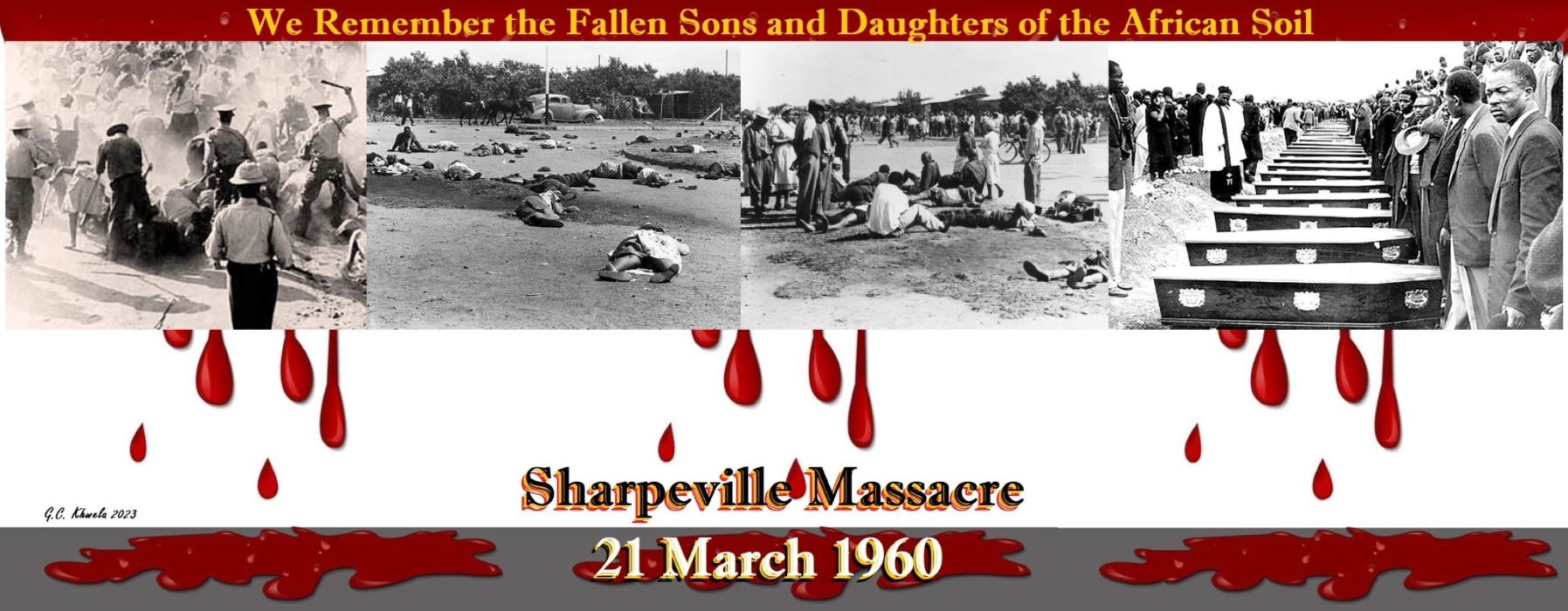
The Gruesome Sharpeville Massacre
The Sharpeville massacre occurred on 21 March 1960, outside the police station in the South African township of Sharpeville, in the then Transvaal. After a day of demonstrations against pass laws, a crowd of about 7,000 protesters went to the police station. The apartheid police opened fire on the crowd, killing 69 people and injuring 180 others, including 19 children. Various sources maintain that the shooting started when the crowd started advancing toward the fence around the police station. Many were shot in the back as they fled the scene.
White colonial governments since the eighteenth century had enacted measures to restrict the flow of black South Africans into cities. Pass laws intended to control and direct their movement and employment were updated in the 1950s. Under the apartheid National Party government, black residents in urban districts were subject to influx control measures. Individuals over sixteen were required to carry passbooks, which contained an identity card, employment and influx authorisation from a labour bureau, name of employer and address, and details of personal history. Furthermore, a new police station was created, from which the police were energetic to check passes, deporting “illegal” residents, and raiding prohibited shebeens.
Sharpeville was a small township about 56 kilometres south of Johannesburg, in the harsh industrial complex around Vereeniging. It was first built in 1943 to replace Topville, a nearby township that suffered overcrowding where illnesses like pneumonia were widespread. Due to the illnesses, removals from Topville began in 1958. Approximately 10,000 Africans were forcibly removed to Sharpeville, which had a high rate of unemployment as well as high crime rates. There were also youth problems because many children joined gangs and were affiliated with crimes instead of schools.
Leading up to the Sharpeville massacre, the National Party administration – under the leadership of the apartheid architect and nicknamed the “father of apartheid”, Dr. Hendrik Verwoerd – used these laws to enforce greater racial segregation and in 1959 extended them to include women. From the 1960s, the pass laws were the primary instrument used by the state to detain and harass its political opponents, particularly the African majority that were denied their South African citizenship.
The African National Congress (ANC) undertook to initiate a campaign of protests against the pass laws. These protests were to begin on 31 March 1960, but the breakaway movement, the Pan Africanist Congress (PAC), led by Robert Sobukwe, decided to pre-empt the ANC by launching its own campaign ten days earlier, on 21 March. The PAC believed that the ANC could not successfully implement the campaign.
On 21 March, a group of between 5,000 and 10,000 people converged on the local police station, offering themselves up for arrest for not carrying their passbooks. Police officers who were estimated to be around 75, were greatly outnumbered and began to panic. They attempted to use tear gas to repel these advances, but it proved ineffectual, and the police fell back on the use of their batons. At approximately 13:00 the police tried to arrest a protester, and the crowd surged forward. The shooting began shortly thereafter. No one heard any warning shots or the order to shoot, as the police opened fire on the crowds as they ran away in fear.
Nelson Mandela provided an appropriate version of the events following the Sharpeville Massacre in his autobiography, “Long Walk to Freedom”. According to Mandela, “The shooting at Sharpeville provoked national turmoil and a government crisis. Outraged protests came in from across the globe, including one of the American State Department. For the first time, the UN (United Nations) Security Council intervened in South African affairs, blaming the government for the shootings and urging it to initiate measures to bring about racial equality. The Johannesburg stock exchange plunged, and capital started to flow out of the country. South African whites began making plans to emigrate. Liberals urged Verwoerd to offer concessions to Africans. The government insisted that Sharpeville was the result of a communist conspiracy.”
“The massacre at Sharpeville”, Mandela continued “created a new situation in the country. In spite of the amateurishness and opportunism of their leaders, the PAC rank and file displayed great courage and fortitude in their demonstrations at Sharpeville and Langa. In just one day, they had moved to the front lines of the struggle, and Robert Sobukwe was being hailed inside and outside the country as the saviour of the liberation movement. We in the ANC had to make rapid adjustments to this new situation, and we did so.”
The police brutality on display during Sharpeville, as well as other innumerable acts of violence under Apartheid, are what inspired South Africa’s famously progressive Bill of Rights, in which the right to life, regardless of race, gender or age is entrenched. 21 March was also proclaimed as a United Nations’ International Day for the Elimination of Racial Discrimination in 1966, inspired by events that took place six years earlier in Sharpeville, South Africa. The day marked a turning point for the future of South Africa and the struggle for liberation, which intensified in its wake, following the banning of the liberation movements.
Sources:
Wikipedia.
South African History Online (SAHO).
Nelson Mandela, “Long Walk to Freedom”, Abacus, 1994.
Castro Khwela
Good evening fellow Compatriots!
Discover more from CASTRO KHWELA
Subscribe to get the latest posts sent to your email.


Hi Castro,
Thanks for this amazing resource. You need to update the Sharpeville story though, as the figures have changed due to new research. You can contact me for more info on the research.
Aluta Continua! Aluta Perpetua! David Forbers