Good morning fellow Compatriots!🙏🏾✊🏾👊🏾
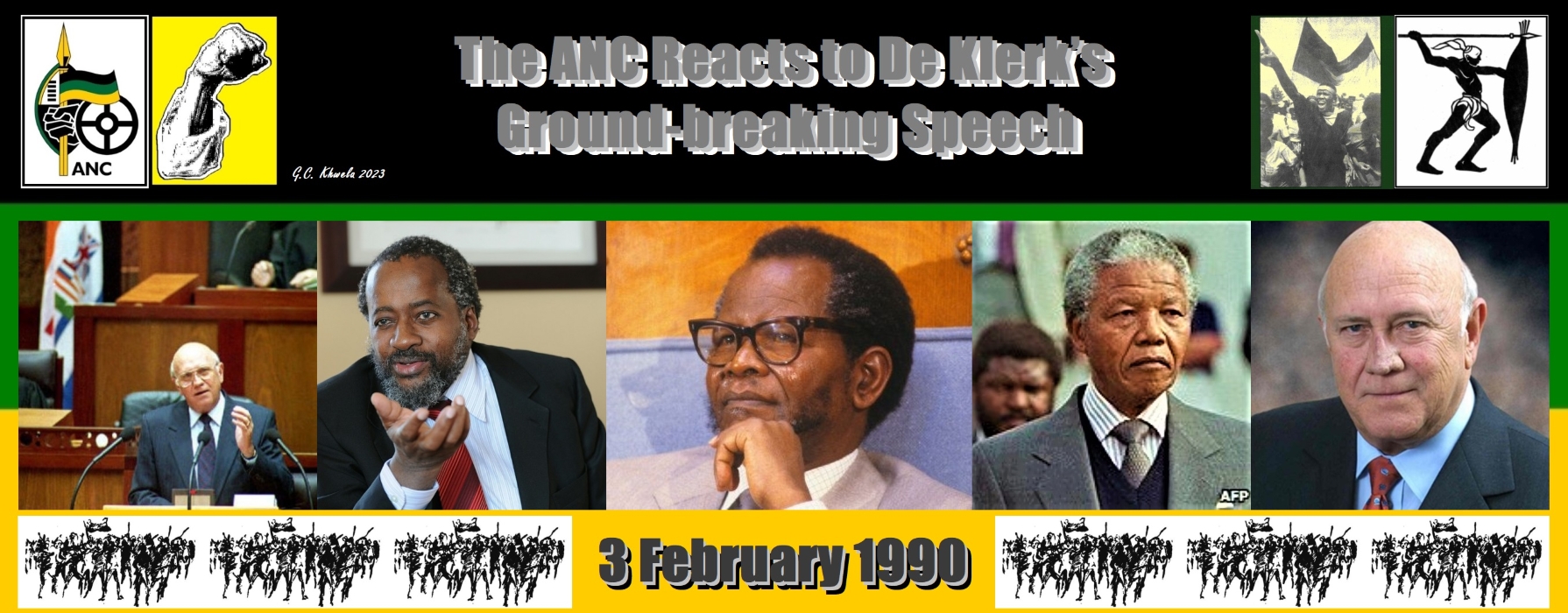
On 3 February 1990, speaking in Lusaka on behalf of the African National Congress (ANC) President Oliver Tambo, member of the National Executive Committee (NEC), Pallo Jordan, mentioned that “the…
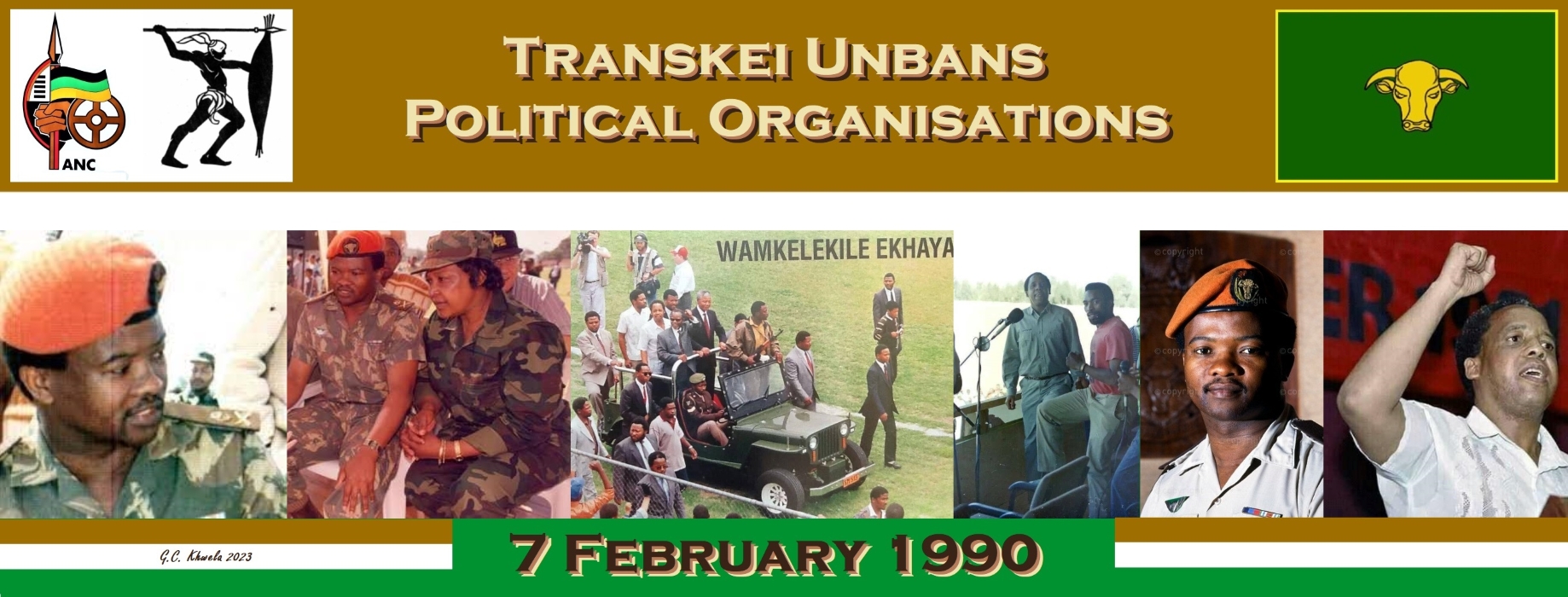
On 2 February 1990, apartheid President F.W. de Klerk made a trailblazing announcement to release Nelson Mandela and unban the African National Congress (ANC), the Pan Africanist Congress (PAC), the…
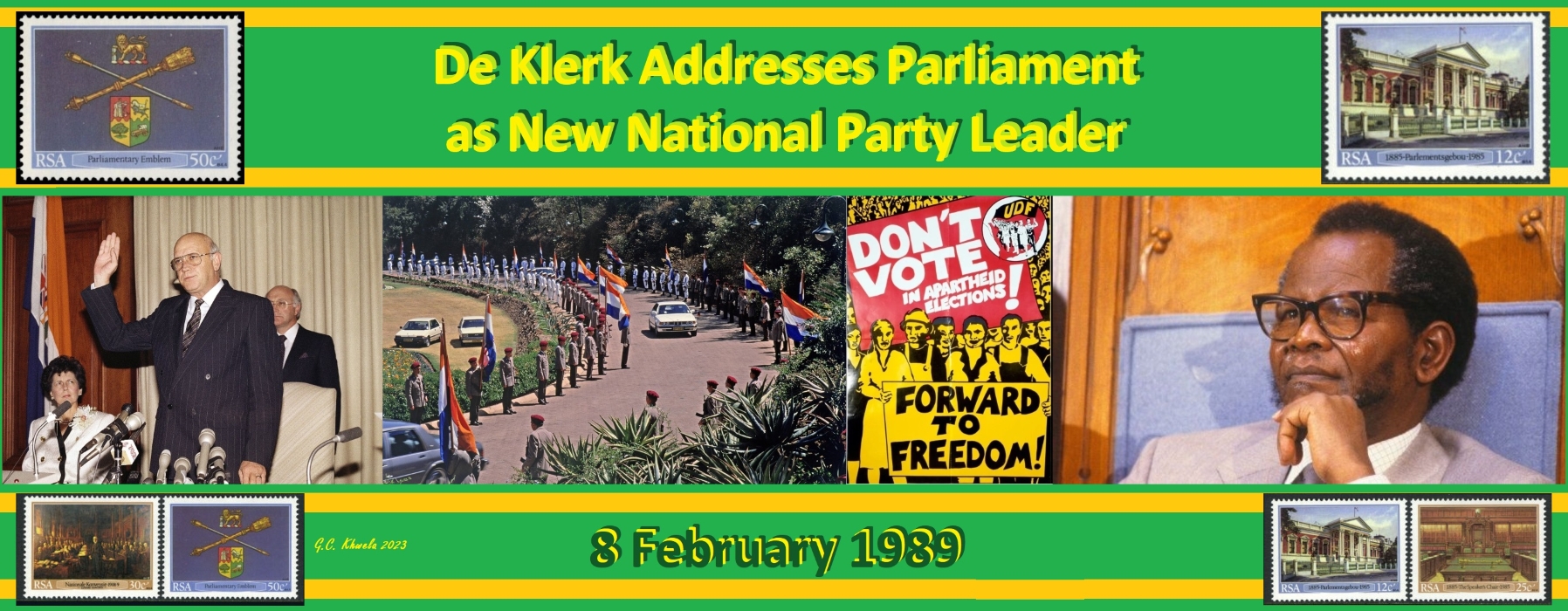
On 2 February 1989, apartheid State President P.W. Botha announced his intention to resign the National Party presidency while remaining State President, after suffering a mild stroke, on 18 January.…
“WE CHARGE OUR CULTURAL WORKERS WITH THE TASK OF USING THEIR CRAFT TO GIVE VOICE, NOT ONLY TO GRIEVANCES, BUT ALSO TO THE PROFOUNDEST ASPIRATIONS OF THE OPPRESSED AND EXPLOITED.”…
On 31 January 1985, faced with trouble at home and pressure from abroad, the apartheid State President PW Botha offered a tepid, halfway measure for Mandela’s freedom. In a debate…
On 28 January 1987, Oliver Tambo, President of the African National Congress (ANC), met with the United States Secretary of State George P. Shultz in Washington D.C. to use American…
When Colonel Eugene de Kock, Head of the C10 Vlakplaas Unit of the apartheid Security Branch, with former Umkhonto we Sizwe (MK) operative, Glory Sedibe (aka “September”), who had been…
On 19 January 1990, a meeting of all African National Congress (ANC) members stationed in the Lusaka area was held in a hall in the Mulungushi Centre, wherein approximately 1…
On 16 January 1994, the Pan-Africanist Congress (PAC) President, Clarence Mlami Makwetu, announced the PAC’s suspension of its armed struggle, thus opening the way for participation in elections by its…