Remembering Malcolm X
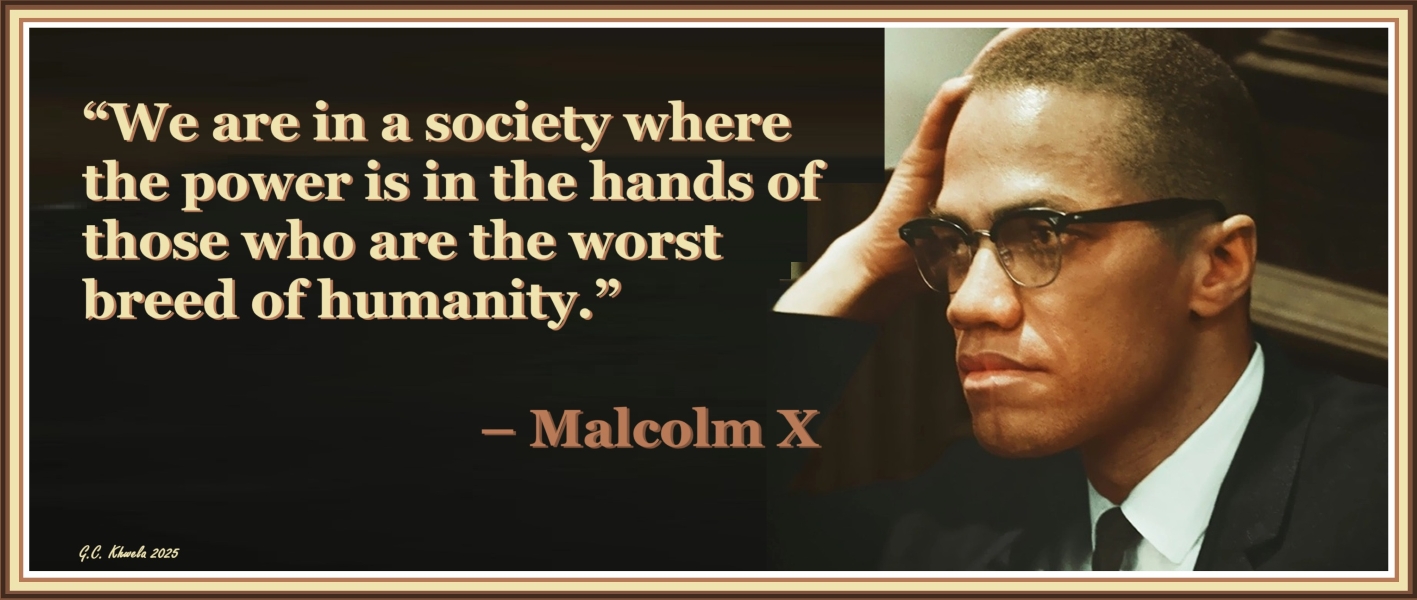
Exactly 60 years ago, 21 February 1965 marks a dark day in African and American history. After receiving numerous threats, Malcolm X was assassinated at the young age of 39. He had tirelessly devoted his life to the pursuit of justice while expressing deep humility and sincerity in his search for the truth. Indeed, these characteristics capture the greatness of this man and endear him to us as a worthy role model for all times.
Malcolm X, originally known as Malcolm Little, was born on 19 May 1925. He was a prominent activist and minister during the 1960s civil rights movement. His unapologetic and passionate advocacy for Black rights brought him international attention. However, some have criticised his rhetoric as being extremist and racist.
Others explain that the assertive, Black nationalistic posture he took in his speeches was necessary for Civil-Rights-era America when discrimination and segregation were legal in many parts of the United States and racism was routine in many aspects of life.
To that point, Malcolm X, who was assassinated in 1965 at the Audubon Ballroom in Harlem, spoke about what some considered his extremist viewpoints.
“I don’t believe in any form of unjustified extremism. But I believe that when a man is exercising extremism, a human being is exercising extremism, in defence of liberty for human beings, it’s no vice. And when one is moderate in the pursuit of justice for human beings, I say he’s a sinner,” he said.
In 1964, Malcolm X announced his separation from the Nation of Islam, changed his name again to El-Hajj Malik El-Shabazz and converted to Sunni Islam, the branch of the religion most Muslims around the world practice. After making a religious pilgrimage to Saudi Arabia and trips to Africa, Malcolm X began to preach less about America’s racist past and divisions and more about Pan-Africanism and about the universality of principles like freedom, justice and human rights, especially as they concern people of African descent.
“Most of [the Negro leaders] who – who, whose existence or whose position of leadership depends upon the – on the subsidy or crumbs for – the crumbs from the white man’s table, will only say what that white man wants to hear. When they get behind the door they talk a different language.” – Malcolm X
What is happening in the three praetorian states in the Sahel region, Burkina Faso, Niger and Mali, reflects exactly what is being covered in the quotation above, as the military leaders of those states are showing other leaders in the African continent that leadership is not about pleasing your neo-colonial masters. It is about serving your own people and placing their interests above everything else.
And the most valuable lesson that Malcolm X left us with is that “Education is the passport to the future, for tomorrow belongs who prepare for it today”. Moreover, he asserted that “THE MEDIA IS THE MOST POWERFUL ENTITY ON EARTH. They have the power to make the innocent guilty and to make the guilty innocent, and that’s power. BECAUSE THEY CONTROL THE MINDS OF THE MASSES.”
Castro Khwela
Good morning fellow Compatriots!🙏🏾✊🏾👊🏾
Discover more from CASTRO KHWELA
Subscribe to get the latest posts sent to your email.