On the evening of 18 January 1963, Justice Gizenga Mpanza, Shadrack Maphumulo and Michael Mvula were at the back of the Argyle Hotel on Clarke Street, Durban, with a carrier bag having cords on top lying in front of them. The carrier bag contained red rubber gloves, a green cord and a rectangular black parcel, that was 7.6 cm by 20.3 cm, and four 10.1 cm high, almost the size of a small box of Choice Assorted biscuits. One of the three, Shadrack Maphumulo, was struggling to put on the red rubber gloves, and his companions were helping him.
The group then moved to Umbilo Road, where Justice Mpanza and Shadrack Maphumulo crept towards a building that housed the apartheid National Party’s regional offices as well as its newspaper in the province, the “Nataller”. Michael Mvula remained on the other side of the road, while Justice Mpanza and Shadrack Maphumulo were dodging a less vigilant night-watchman who was sitting on a wooden box on the opposite side of the building.
At the target building, Mpanza placed five cylindrical sticks of dynamite against the front wall, attached a detonator with a fuse, and then pulled the fuse along the wall of the building, which was out of sight from the traffic. While Shadrack Maphumulo was holding the fuse, Justice Mpanza sliced it close to a forty-five degree angle, filled a capsule with acid, and placed it into a match box containing white powder. He then clamped the cut part of the fuse into the match box. Mpanza then informed Maphumulo that they only had ten minutes, while placing the box carefully on the floor, and both left the building.
Around 21:20 that evening, Eric Stanley, his wife and children were singing hymns as they walked down Umbilo Road on their way from church. All of a sudden they heard a bang from a nearby explosion, with Mrs Stanley suffering a cut on her leg. She was picked up by her husband who placed her on the bonnet of a car, and then told his daughter to call an ambulance. When a car came towards them, he stopped it, and requested the driver to assist. The driver had a first-aid kit with bandages, which he used to bandage the foot of Eric Stanley’s wife.
At the scene of the explosion, the “Nataller” newspaper’s printing room, which was below ground level, was damaged. Five heavy concrete louvres from the building were lying in the street. There was wrecked office equipment inside the building and the surrounding cars and buildings were extensively damaged. This was operation was part of the Opening Phase of Umkhonto we Sizwe’s (MK’s) Sabotage Campaign in the 1960s. According to the MK Manifesto:
“The people’s patience is not endless. The time comes in the life of any nation when there remain only two choices: submit or fight. That time has now come to South Africa. We shall not submit and we have no choice but to hit back by all means within our power in defence of our people, our future and our freedom.”
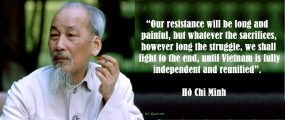
Thus ran the clarion call of the Manifesto of Umkhonto we Sizwe (MK) clandestinely posted in public places in South Africa as the first bomb blasts heralding its existence exploded at apartheid offices and installations. The resort to armed resistance was not exceptional to South Africa. The 1960s saw a similar turn to armed struggle in Angola, Mozambique, Namibia and Zimbabwe, and further afield in Guinea-Bissau and earlier in Kenya and Algeria and beyond. The latter two struggles were rooted in the post-World War II decade of the 1950s which saw most notably the triumph of the Vietnamese over the French and the victory of the Cuban Revolution, both of which were to feature in contributing to the advance of the struggle – particularly the MK’s armed struggle. (Ronnie Kasrils, “African Communist”, Issue 194, 1st Quarter 2017, p. 52).
“The time comes in the life of any nation when there remain only two choices: submit or fight. We shall not submit…”
Castro Khwela
Good day fellow Compatriots!
Discover more from CASTRO KHWELA
Subscribe to get the latest posts sent to your email.