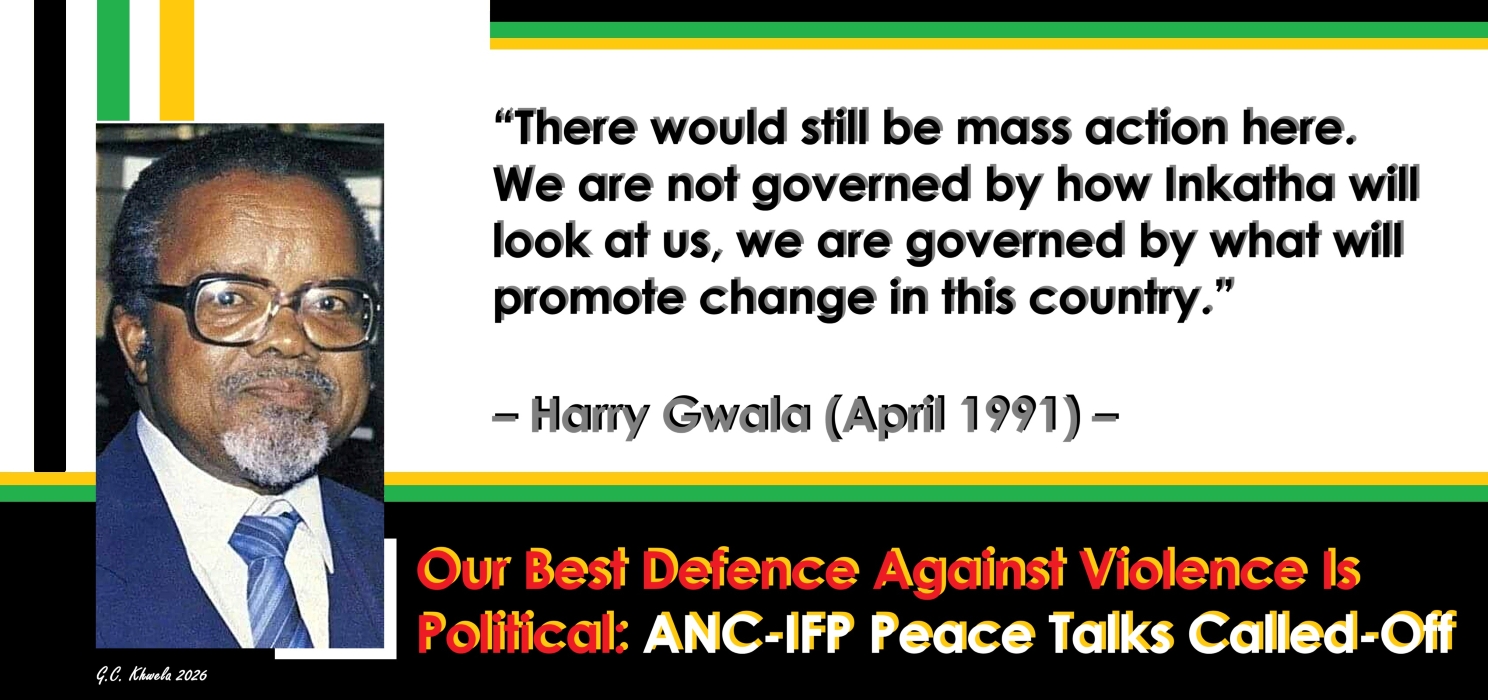
Our Best Defence Against Violence Is Political: ANC-IFP Peace Talks Called-Off
On 8 April 1991, the peace talks between the African National Congress (ANC) and the Inkatha Freedom Party (IFP) were called off as a result of the ANC’s ultimatum sent to apartheid President F.W. de Klerk, in which the ANC demanded that De Klerk stop aiding and abetting the IFP in the ongoing feud with the ANC and its alliance partners, the United Democratic Front (UDF) and the Congress of South African Trade Unions (COSATU).
IFP leader Chief Mangosuthu Gatsha Buthelezi was again angered by the ANC allegations that the IFP is backed by the security forces to kill ANC members. Buthelezi accused the ANC of putting the country on the brink of civil war and of aiming to wreck the negotiation process, setting the stage for an attempt to seize power. When Buthelezi launched the Inkatha Freedom Party (IFP) in July 1990, which was before then called Inkatha YeNkululeko Yesizwe (founded in 1975), he declared that “We will not allow the ANC and its SACP partners to crush all opposition and emerge as the only viable party”.
The killings began in earnest in 1983 when the UDF “invaded” Natal, Chief Buthelezi’s home “turf”. After Mandela signed the Pretoria Minute in August 1990, having unilaterally declared that the ANC would suspend the armed struggle, violence escalated dramatically. KwaZulu and Natal became killing fields as supporters of the ANC and the IFP engaged in ferocious enc