MK-ZIPRA Cooperation – For MK Infiltration through Matabeleland
On 15 September 1978, five combatants of Umkhonto we Sizwe (MK) arrived at the Zimbabwe African People’s Union (ZAPU) residence in Francistown, Botswana, having hitch-hiked their way from Zambia. They included Thomas “Victor” Hlabane (aka “Buti Bucks”), Leslie Dube, Mzomdala Mdladla, Mabala Mehlomakhulu and Selathiel Sethlapelo, and were all in possession of Zambian identity documents indicating that they were Rhodesian nationals.
While they were at the ZAPU house, an ANC official called “Thabo” (real name Victor Modise) visited them in the company of another person. Thabo then advised the ZAPU representatives that “Victor” and his comrades were to join the Zimbabwe People’s Revolutionary Army (ZIPRA) military group in the Tuli area. The intention was to resume their mission to infiltrate South Africa in the Beitbridge area, which was terminated following the ambush of the joint MK/ZIPRA Unit in January 1978.
On 22 January 1978, at a fence demarcating the boundary of a kraal in the Dibilishaba Tribal Trust Lands in Gwanda, which was in Matabeleland, Rhodesia, a ZIPRA Unit was ambushed by Rhodesian Security Forces. The Unit included MK combatants, Thomas “Victor” Hlabane and Danger Ncube, who were attached to the ZIPRA call-sign. During the course of the ambush, Danger Ncube was killed, as well as Base Ncube, who was the Commander of ZIPRA in the region. “Victor” Hlabane managed to escape alongside the remainder of the ZIPRA guerrillas that eventually returned to Botswana.
Following a short meeting between “Thabo” and Elliot Sibanda, the ZAPU’s deputy representative in Francistown, on 15 September 1978, Sibanda agreed to integrate the five MK combatants into the ZIPRA Units operating in the area. Sibanda then took the five MK combatants to a place called Nkala’s Kraal near the “Tuli circle”, which was a sixteen kilometre ‘circle’ approximately ninety kilometres west of Beitbridge and close to the Botswana border. The five MK cadres were then joined up with the ZIPRA Unit in the area that was under the command of “Sylvester”.
This cooperation resumed after Joshua Nkomo was given command of ZIPRA forces in the leadup to the “Turning Point,” which sought no less than a full-scale invasion of Rhodesia and the seizure of political power from the Smith regime. At that time ZAPU cadres had made significant inroads in the Zimbabwean hinterland. Most analysts as well as writers of ZAPU history have understood the “Turning Point” as a purely military strategy, but this was an all-embracing vision which was meant to inspire and motivate all members of the Movement. This new strategy was taken so seriously that every member of the ZAPU Revolutionary Council, being privy to critical information, participated in a signing ceremony during which they had to pledge to unyielding secrecy.
By the end of 1977, ZIPRA guerrillas were operating in a wide arc, from Sipolilo and Urungwe in the north, through Gokwe and Silobela in the centre of the country, to Lupane, Nkai and Tsholotsho in the west. ZIPRA forces had also crossed the Salisbury-Bulawayo rail line, south of the Shangani, and opened their Southern Front towards Shabani, and further south towards Gwanda and Beitbridge. The main thrust of the “Turning Point” strategy was meant to supplement these guerrilla units with regular forces which would defend and establish bases once zones had been liberated or semi-liberated.
ZIPRA guerrilla forces were making progress travelling further inside Rhodesia when, according to the plan, Rhodesian military elements would be scattered trying to dislodge entrenched units of conventional soldiers in positions throughout Matabeleland North and the west Midlands. Consequently, the situation in Rhodesia had become untenable by the end of the decade for the racist Smith regime. News of Rhodesian losses and sabotage attacks in predominately white areas effectively ended “normal” civilian life, and Rhodesia’s economic output was critically impacted by the reallocation of resources for the war effort which were originally intended for manufacturing sectors.
As a result of the intensification of the revolutionary war in 1977, cracks seemed to appear in the cohesion of the racist Rhodesian Front Party. During February 1977, Minister of Defence Reginald Cowper resigned, ostensibly as a result of the controversy surrounding new call-up measures. The tight rein kept on the running of the war by the Prime Minister, Ian Smith, sometimes to the exclusion of his Minister of Defence, later proved to be the real reason for Cowper’s resignation. Further dissension occurred when Smith forced through the Land Tenure Amendment Bill during March, whereby white agricultural land was opened for purchase by all races. A group of twelve dissident Rhodesian Front members opposed the Bill and Smith had to rely on the votes of six African Members of Parliament to have it passed. Predictably this led to a cabinet reshuffle on 10 March 1977.
By late March 1977 the racist Rhodesian government admitted that the insurgency had developed into a full-scale revolutionary onslaught. Before the onslaught, Rhodesia had managed to cope with its economic and political isolation by engendering a sense of self-sufficiency and support from its racist counterparts in South Africa, which was a boon to farmers and other settler Rhodesians who were expected to make up for import shortfalls by producing and variating basic foodstuffs and other essentials. However, this was no longer possible, as farmers were reluctant to remain and work their land due to the threat of increased guerrilla attacks. General uncertainty and suggestions of fear prevailed within the white settler community. Accordingly, the only option remaining for the Smith regime, was a negotiated settlement through which they could secure favourable terms.
Following the negotiations and the Lancaster Agreement that led to Zimbabwe obtaining independence in 1980, ZAPU left Angola for Zimbabwe and donated two military training camps to MK, named Caculama and Camalundi, in the Malanje province of Angola. It also donated a flat in Luanda to the African National Congress (ANC). The linguistic similarities between Ndebele, Zulu and Xhosa would also have facilitated communication between MK guerrillas and the local Matabeleland populations. This made it easier for guerrillas passing through western parts of Southern Rhodesia to reach the borders of South Africa for infiltration. A number of border towns in Southern Rhodesia also shared languages spoken across the border in South Africa.
ZAPU was chosen by the ANC for two basic reasons, which were both ideological and practical. The ANC was ideologically closer to ZAPU as both political formations were trained by the Soviet Union. In fact, members of MK and ZIPRA, the military wings of the ANC and ZAPU respectively, trained in the Soviet Union and the German Democratic Republic (former East Germany). Soviet training of ANC and ZAPU cadres in the early periods of their armed struggles was based on guerrilla training appropriate to the needs of the southern African movements, drawing on Soviet experiences during World War II. Furthermore, both the ANC and ZAPU had bases and safe houses in similar countries, such as Angola, Mozambique, Botswana and Zambia. MK and ZIPRA instructors also helped train each other’s cadres in Angola and Zambia, where both organisations had established bases.
Between Lusaka and South Africa stood two major obstacles: the apartheid government’s friendly neighbours Rhodesia (now Zimbabwe) and Portuguese-run Mozambique. MK formed a strategic alliance with ZAPU, fighting alongside ZIPRA while making their way southward to South Africa. Apart from sending groups of selected cadres to South Africa through the various fronts that had been opened with the independence of Mozambique and Angola, from 1977 the ANC once again had a chance to involve its fighters in “others’ wars” in the sub-continent. Mainly, Joshua Nkomo’s wing of ZAPU agreed to the participation of MK cadres in its operations in the Matabeleland region of south-western Rhodesia.
Historical accounts maintain that the MK-ZIPRA Alliance began in 1966 at the Kongwa camp in Tanzania, where both groups received Soviet military support, and their alliance was encouraged by the governments of Tanzania and Zambia. This alliance was initially announced on 18 August 1967, when guerrillas of both armed forces clashed with Rhodesian and South African apartheid forces in Wankie and later in Sipolilo Campaigns in Rhodesia. MK leaders were looking for a new avenue through which to infiltrate South Africa and ZIPRA commanders believed that insurgency south of the Limpopo River would distract South African security forces from assisting Rhodesia.
Battles and skirmishes that occurred during the Wankie and Sipolilo Campaigns surprised the Rhodesian and South African security forces, especially in terms of MK and ZIPRA discipline, training, and Eastern Bloc armament. These racist forces were amazed at the fighting ability of both the MK and ZIPRA guerrillas, as they had thought it was going to be an easy feat to engage them. However, the fighting lasted until late 1968, which became a strong indication that the racist forces were going to face gruelling guerrilla wars in the near future.
As a consequence of the MK-ZIPRA incursions, the apartheid Pretoria regime sent 2 000 men into the Zambezi Valley. By 1969, 2 700 South African troops were in the valley as the Rhodesian bush war intensified, largely exaggerated by fears that ZIPRA would cross many MK guerrillas. These fears led to a massive deployment of the apartheid South African Defence Force (SADF) as well as massive military hardware. The apartheid government made sure that the first line of defence, namely the Zambezi River and its environs, were well-secured.
Beginning in 1970, the Zambezi River was patrolled by South African boats, jets and helicopters and military camps were also erected along the Zambezi valley. The Zambezi River became more of a barrier than a conduit, since often ambushes along the river became common. Most men and material struggled to reach the Rhodesian side of the river. Moreover, supply lines were more difficult to maintain than those that depended on long marches under the cover of foliage. In addition, crocodiles and hippos along the river also toppled canoes resulting in imminent deaths, resulting in a heavy toll on crossing guerrillas.
Rhodesian and South African soldiers would deliberately shoot at hippos to make them angry so that they would not hesitate to attack any human being entering the river. A similar approach was adopted with buffaloes along certain routes where guerrillas were anticipated to pass. When guerrillas tried to shoot the attacking animals in self-defence, they inadvertently alerted the racist soldiers whose camps were dotted along the Zambezi River valley.
As an attempt to circumvent physical challenges posed by crossing armed men through Rhodesia, Umkhonto changed its tactics between 1970 and 1975 and began transferring its guerrillas through formal borders using forged documents. However, once they were in South Africa, some of the guerrillas were arrested. As a result, there was a growing disillusionment among guerrillas over the failure of the ANC leadership to provide safe routes into South Africa. Due to the restlessness on the part of guerrillas who were demanding to go to the front after their training, the Movement had to find other routes through Rhodesia, as part of the ZIPRA contingents infiltrating the country.
Hence, despite initial setbacks, the ZAPU-ANC alliance began to conduct large infiltration operations into South Africa through Rhodesia in the late 1970s. Once the cadres were inside Rhodesia, the majority of the ZIPRA fighters split into two smaller units and proceeded to their designated operation zones in Matabeleland, while another ZIPRA contingent escorted MK cadres south to cross the Limpopo. Although some MK members managed to push through Rhodesian cordons and enter South Africa, MK often suffered a high number of casualties, largely due to the politically unprepared communities alongside the border. In the late 1970s, especially in 1979, MK had infiltrated at least 100 cadres into Rhodesia alongside ZIPRA.
Nevertheless, the close relations forged over decades between the ANC and ZAPU did not, however, mean the revival of the military alliance in the late 1970s, as was the case in the mid- to late-1960s. When the revolutionary war became vastly expanded, another act of solidarity was extended, in which ZAPU offered MK combatants training and entry into ZIPRA’s semi-liberated zones. This provided a chance of ending MK’s oppressive waiting in the camps and the ability to enter South Africa through Rhodesia. In the accounts of ZIPRA veterans, it was they who had assumed the role of being a protective big brother to MK combatants from the late 1970s into the 1980s. ZIPRA forces were often willing to grant MK a political sophistication they sometimes lacked and to credit them with advanced technical training, especially in engineering, appropriate for urban warfare.
Undoubtedly, cooperation between ZAPU and the ANC goes way back than the Wankie and Sipolilo Campaigns. According to Abraham Nkiwane, who was one of the first members of ZAPU’s Special Affairs Department – an organ that carried out destabilisation of the minority government of Rhodesia and was later reformed into ZIPRA – military co-operation, the alliance, began having a significant role very early on. For instance, most historians and analysts believed that the military alliance of Smith’s Rhodesia and Vorster’s South Africa began after the joint Wankie and Sipolilo incursions of 1967-68. However, Nkiwane states that the reverse was true “…we then came together and started working together until late in 1963 … we had a high command made up of cadres from the ANC and ZAPU”.
Nkiwane asserts that: “… when we started operating we started infiltrating people through the Zambezi into Rhodesia then, and as we went exploring ways where we could cross people over to Zimbabwe, every time we were at the Zambezi River, it doesn’t matter at what point, big South African Buccaneers were overflying the area almost at water level. So, we realised that the Zambezi was being… the surveillance was being done by the South African armed forces. … Then we realised that the South African Defence Forces had transferred the defence line onto the Zambezi. Then we thought it was worthwhile that ZAPU and the ANC came into some form of alliance and tried to fight the enemy where he was found.”
The military co-operation continued, in fact, up until after Independence. ZIPRA Commander, Christopher Moyo referred to being deployed into the Hwange area along with six ANC cadres in 1979. After Independence the situation changed, but ultimately ANC’s needs were still the same – they needed to be helped to cross Zimbabwe with their weapons and enter South Africa. Nkiwane also recalled that he was actually accommodating ANC intelligence personnel while other former ZIPRA cadres accommodated MK combatants. At Nkiwane’s residence, “These belonged to [Jacob] Zuma because only Zuma came to see them, came to give them instructions, and not [Joe] Modise. Modise went to Akim to see his group, because Modise was military, and Zuma was intelligence.”
Even as late as 1987, Nkiwane was assisting ANC to get their personnel and weapons into South Africa through Beitbridge. In fact, the alliance with other liberation movements was not restricted to the ANC. In the 1960s, a loose alliance existed between six movements – ANC, ZAPU, FRELIMO, SWAPO, MPLA and the PAIGC. They called themselves the “authentic” liberation movements, and supported each other diplomatically, trying to promote each other amongst the international community. According to Nkiwane, “… we operated together. Even our camps in Tanzania, we were accommodated at a place away from Dar Es Salaam at a place called Dodoma, which was… where we established our camps… ANC, FRELIMO, MPLA, SWAPO and us. …We were together in one camp.”
Furthermore, in Lusaka, they sometimes assisted each other with the use of properties and shared celebration days. But it was not only the ANC which gave military assistance. Nkiwane maintains that both MPLA and FRELIMO helped out as well: “We got weapons from Mondlane, we got weapons from Augostino Neto with Shipenda who was their representative in Dar Es Salaam. He gave him authority to give us any amount of weapons because the two Portuguese countries had more weapons stored in the harbour, in the port in Dar Es Salaam than anybody else. Ethan [Dube] and myself we could walk there into a ship and select as much weapons as we could.”
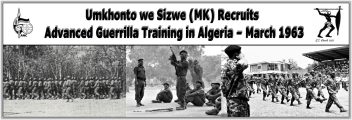
“ZIPRA-MKHONTO! HAWU! ZINYAMAZANE!” Chanted and barked the guerrilla fighters of MK and ZIPRA as they did the Toyi-Toyi Algerian march in the various camps in Zambia and Angola.
Sources:
Wikipedia.
South African History Online (SAHO).
South African History Archives (SAHA).
Norman “Billy Holiday” Pietersen, “UMkhonto we Sizwe (MK) in Exile”, South African History Online (SAHO), 7 November 2011.
SAHA, “ZAPU: Through Zenzo Nkobi’s Lens”, South African History Archives (SAHA), 2025.
Dumiso Dabengwa, “The 1967 Wankie and 1968 Sipolilo Campaigns: The Impeccable ZAPU and ANC Alliance in Retrospect”, The Thinker, Vol. 80, 2019.
C. Ngwenya and R.R. Molapo, “The Politics and History of the Armed Struggle in Zimbabwe”, Journal for Contemporary History, Vol. 43, No. 1, 2018.
Timothy J. Stapleton, “A Military History of South Africa: From the Dutch-Khoi Wars to the End of Apartheid”, Praeger, 2010.
Joshua Chakawa and Vongai Z. Nyawo-Shava, “Guerrilla Warfare and the Environment in Southern Africa: Impediments Faced by ZIPRA and Umkhonto we Sizwe”, Oral History Journal of South Africa, Vol. 2, No. 2, 2014.
Jocelyn Alexander and Joann McGregor, “African Soldiers in the USSR: Oral Histories of ZAPU Intelligence Cadres’ Soviet Training, 1964-1979”, Journal of Southern African Studies, Vol. 43, Issue 1, 2017.
Jocelyn Alexander, JoAnn McGregor and Blessing-Miles Tendi, “The Transnational Histories of Southern African Liberation Movements: An Introduction”, Journal of Southern African Studies, Vol. 43, Issue 1, 2017.
Jocelyn Alexander and Joann McGregor, “The Travelling Toyi-Toyi: Soldiers and the Politics of Drill”, Journal of Southern African Studies, Vol. 46, Issue 5, September 2020.
Stuart Doran, “Gukurahundi Origins: Myth and Reality, Part 1 – ‘War’ in Bulawayo, 1980-1”, Daily Maverick, 31 July 2017.
Stuart Doran, “Gukurahundi Origins: Myth and Reality, Part 2 – The Arms Caches ‘Crisis’, 1982”, Daily Maverick, 7 August 2017.
Stuart Doran, “Gukurahundi Origins: Myth and Reality, Part 3 – The Tourist Abduction, 1982”, Daily Maverick, 13 August 2017.
Stuart Doran, “Gukurahundi Origins: Myth and Reality, Part 4 – The One-Party State, 1980–1987”, Daily Maverick, 23 August 2017.
Nick Warner, “Times of Darkness: Ethnicity and the Causes of Division within the Rhodesian Guerrilla Groups”, Master of Arts: Australian National University, June 1981.
Nicholas Baker, “‘Yesterday it was One Man One Vote, Today it is One Man One Gun’: Competing Nationalist Narratives and the Zimbabwe African People’s Union, 1961-1980”, Master of Arts: Dalhousie University, June 2018.
Gregory F. Houston, “Military Bases and Camps of the Liberation Movement, 1961-1990”, Human Sciences Research Council, January 2013.
Patrick Ricketts, “Routes to Freedom: The Pipeline to Freedom – Botswana and the Liberation Struggles in Southern Africa – People, Places & Events”, Botswana National Museum, (No date provided)
Maren Saeboe, “A State of Exile: The ANC and Umkhonto we Sizwe in Angola, 1976-1989”, Master of Arts: University of Natal, December 2002.
J.K. Cilliers, “Counter-Insurgency in Rhodesia”, Croom Helm, 1985.
Stephen Ellis, “External Mission: The ANC in Exile, 1960–1990”, Oxford University, 2013.
Thula Simpson, “Umkhonto we Sizwe: The ANC’s Armed Struggle”, Penguin, 2016.
Stephen Davis, “The ANC’s War Against Apartheid: Umkhonto we Sizwe and the Liberation of South Africa”, Indiana University, 2018.
Castro Khwela
Good day fellow Compatriots!
Discover more from CASTRO KHWELA
Subscribe to get the latest posts sent to your email.